
Industrial ultrafiltration UF systems
- Uses semipermeable membranes to separate particles 1-100 nm.
- Operates under low pressure (0.1-10 bar) for energy efficiency.
- Removes colloids, proteins, and suspended solids.
- Widely applied in water treatment and food processing.
- Membrane fouling is a key challenge requiring maintenance.
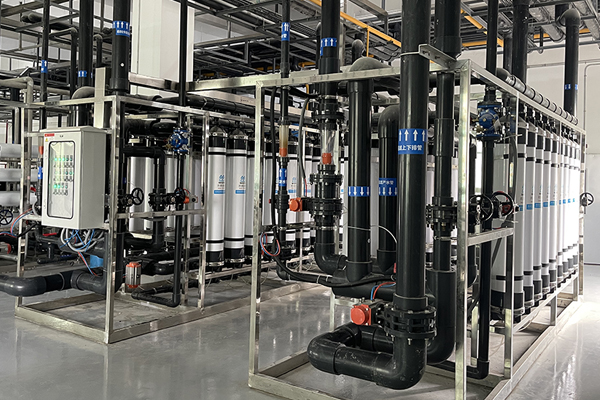
KYsearo designs industrial ultrafiltration systems by picking suitable membrane layer materials (e.g., PVDF, cellulose acetate) based upon application. We figure out pore dimension (1-100 nm) and configuration (hollow fiber, flat sheet). UF System layout consists of circulation price, pressure, and module plan. We maximize for performance, fouling resistance, and scalability, tailoring to uses like water treatment or healthy protein separation.
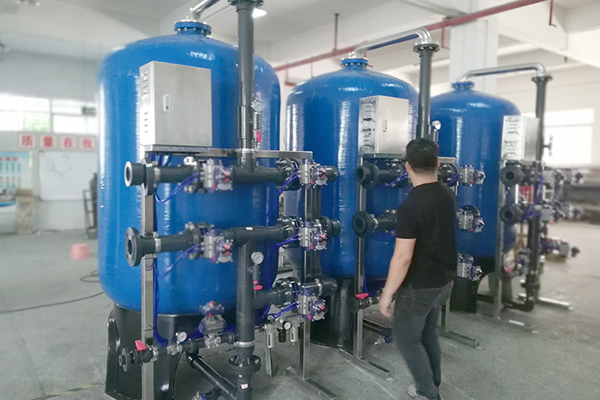
- Pre-treatment: Usage multi-media filters (20μm) to safeguard membranes from big fragments.
- Modular Arrangement: Set up UF modules in skids for scalability (e.g., 2– 50 T/h capability).
- Flow Characteristics: Maximize cross-flow or dead-end purification to lessen fouling.
- Automation: PLC-controlled systems allow automatic backwashing (every 20– 60 minutes) and CEB/CIP cleansing.
- Material Selection: FRP/stainless steel housings make certain toughness in rough problems.
- Energy Effectiveness: Low-pressure operation (< 6 bar) and recuperation rates (75– 95%) lower operational costs.

Your leading industrial ultrafiltration systems manufacturer
What is Ultrafiltration UF?
Ultrafiltration (UF) is a pressure-driven membrane layer separation process placed in between microfiltration, and nanofiltration (NF). It divides fragments and high molecular weight solutes from liquids mostly by size exclusion. UF is vital in numerous commercial and municipal uses, offering benefits over traditional techniques like sedimentation or sand filtering. UF systems efficiently remove suspended solids, colloids, macromolecules, germs, and viruses, enhancing item purity, water top quality, and procedure performance.

How is Splitting Up Device and Pore Dimension of industrial UF System?
UF’s core principle is size exclusion. A semi-permeable membrane enables solvent and smaller sized dissolved molecules (penetrate) to pass while preserving larger bits and solutes (concentrate). This is driven by a transmembrane stress (TMP) throughout the membrane layer. Unlike reverse osmosis (RO), UF operates at low pressures (1-10 bar) as osmotic stress is negligible for the kept specie.
UF membrane layer pore sizes range from 0.01 to 0.1 micrometers (10 to 100 nm). This array effectively maintains:
- High molecular-weight compounds, colloids, polymers, macromolecules, healthy proteins. Microorganisms, infections, protozoa.Fatty acids, suspended solids. UF membrane layers are characterized by Molecular Weight Cut-Off (MWCO) in Daltons (Da), showing the molecular weight above which solutes are mainly kept (commonly > 90% rejection).UF membranes usually maintain products from 1,000 to 1,000,000 Da.
Substances considerably listed below the MWCO and pore dimension travel through, consisting of:
- Low molecular-weight organics. Ions (salt, calcium, magnesium, chloride, sulfate), salts, minerals. UF successfully separates molecules varying by a minimum of an order of magnitude in size. Membrane layer permeability can additionally be impacted by feed stream residential properties.
Membrane Types, Products, and Component Configurations
UF membrane layers are available in different types and materials, each matched for different applications.
Membrane Products
Products are mainly polymeric (organic) or ceramic (not natural).
- Polymeric Membranes: Most common because of lower price and easier manufacture. Instances: PS, PES, PVDF.
- Qualities: Higher permeate change, even more versatile, wider pore size range.
- Advantages: Lower resources expense, ideal for large scale, generally less fouling prone. Improved formulas boost stability and life expectancy.
- Limitations: Susceptible to chemical/thermal degradation and mechanical anxiety. Shorter lifespan than ceramic.
- Ceramic Membranes: Made from steel oxides (alumina, zirconia, titania, SiC).
- Characteristics: High mechanical, thermal, chemical security. Withstand severe conditions, use longer life span (10-20+ years).
- Advantages: Toughness, resistance to rough cleaning, longer life expectancy. Made use of sought after areas: potable water, food/dairy, chemical, wastewater (including oily water).
- Limitations: Higher manufacturing/capital expenses. Can have reduced flux and flexibility. Pore size schedule is enhancing.
The cost void is tightening. While polymeric has lower ahead of time price, ceramic’s sturdiness and lifespan can indicate lower lifecycle costs. Clay is discovered as a low-cost ceramic material.
Module Configurations
Membrane layers are put together right into components for high location thickness and flow effectiveness:
- Hollow Fiber: Bundles of fine tubes. Feed streams inside or outside fibers. High packaging density, usual in water/wastewater.
- Spiral Injury: Flat sheets wound around a tube. Feed moves spirally across the surface area. High packaging thickness, typical industrially.
- Plate-and-Frame: Level sheets divided by plates. Feed moves between plates. Used for viscous liquids or easy access.
- Tubular: Membranes inside bigger tubes. Feed flows via tubes. Much less susceptible to clogging, suitable for high solids, reduced packaging density. Ceramic membranes typically tubular or level sheet.
Arrangement option relies on feed features, packing thickness requirements, cleansing simplicity, and price.

How is industrial uf System Layout Principles and Operational Parameters?
System layout and procedure are crucial to efficiency, fouling control, and effectiveness.
System Architectures: Dead-End vs. Cross-Flow
UF systems utilize dead-end or cross-flow purification, relying on feed solids material.
- Dead-End Purification: Feed flows perpendicularly to the membrane. Retained substances accumulate on the surface, developing a cake layer.
- Advantages: Easier, reduced energy, higher water healing, smaller sized impact.
- Disadvantages: Prone to fast fouling with high solids, challenging fouling control. Foulants deposit inside pores.
- Applicazioni: Reduced solids fluids (pre-treated water, some alcohol consumption water).
- Cross-Flow Filtering: Feed circulations tangentially across the membrane layer. Shear pressures move away fragments, minimizing cake layer and focus polarization. Separates feed into penetrate and concentrate.
- Advantages: Much better fouling management, appropriate for higher solids, constant performance. Better flow distribution.
- Disadvantages: Greater energy for recirculation, lower water recovery (as a result of focus stream).
- Applicazioni: Greater put on hold solids or when regular flux is required (industrial, wastewater).
Cross-flow’s surface fouling monitoring is often chosen for difficult feeds.
Operational Parameters
Secret specifications affecting performance, flux, being rejected, and fouling include Back pulsing Frequency, VRF, Run Time, Cross-Flow Rate, and TMP.
- Transmembrane Pressure (TMP): Driving pressure. Pressure difference throughout the membrane. Higher TMP enhances change but can portable foulant, boost polarization, and create permanent fouling/damage.TMP is vital; optimization devices assist maximize change. It’s the most significant aspect among the 5 examined.
- Flow Price (Flux): Permeate quantity per membrane layer location per time (L/m ²/ h or LMH). Shows productivity. High change is feasible at low pressure. yet enhances fouling risk.
- Cross-Flow Velocity (Cross-Flow Systems): Tangential feed velocity. Greater rate enhances shear, lowering polarization and cake layer, minimizing fouling [11, 14] Requires greater pumping power. Less substantial than TMP/VRF yet more than Back pulsing/Runtime.
- Temperature level: Impacts viscosity and solubility. Greater temperature reduces viscosity, increasing change. Can affect membrane layer stability and biofouling.
- Volume Reduction Aspect (VRF): Feed circulation rate/ concentrate flow price (cross-flow). Greater VRF indicates even more penetrate yet greater concentrate concentration, enhancing polarization/fouling. Denial can raise with VRF as a result of denser fouling. VRF is the 2nd most significant element after TMP.
- Tempo di esecuzione: Procedure duration between cleansing. Fouling gathers, lowering flux or increasing TMP.
- Back pulsing Frequency (some systems): Requiring penetrate back through the membrane layer to remove foulants. Effectiveness differs by foulant/design. Can be non-influential for penetrate quality in some cases.
Optimizing parameters balances flux/recovery with reducing fouling/energy. Flux-pressure information helps understand fouling and maximize. The resistance-in-series design evaluates resistance contributions (membrane, polarization, fouling).
Speculative Factor: Future systems may make use of real-time fouling tracking and predictive control to dynamically adjust specifications (TMP, cross-flow, back pulsing) based upon fouling/feed quality, possibly improving performance, life expectancy, and minimizing cleansing.
What Applications of Ultrafiltration Sytem?
Substantial in municipal and commercial water:
- Drinking Water: Filters municipal water, eliminating bacteria, viruses, protozoa, solids for security. Can change sedimentation, sand filtration, chlorination.
- Industrial Wastewater: Treats wastewater for reuse, preservation, cost reduction. Recuperates components, focuses dyes, separates oil-water, clarifies fluids. Ceramic membranes treat oily produced water.
- Municipal Wastewater: Integrated right into treatment trains, replacing standard steps. Ceramic UF treats pre-sedimented wastewater.
- Pre-trattamento: Typical for RO/IX. Eliminates solids, colloids, high MW organics, safeguarding downstream membranes and extending life-span. Lowers SDI for RO feed.
Trova subito una soluzione
Related Products

 Italian
  English
  Arabic
  Spanish
  Russian
  Danish
  German
  Indonesian
  Romanian
  Vietnamese
  Turkish
  Thai
Thai