
KYsearo
RO Water Treatment Plant Manufacturer
Leading RO Water Treatment Plant Manufacturer In China
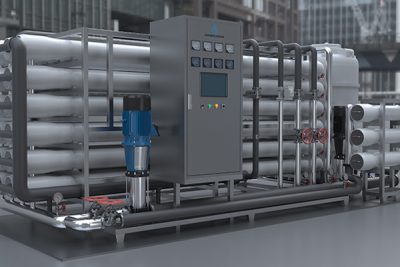
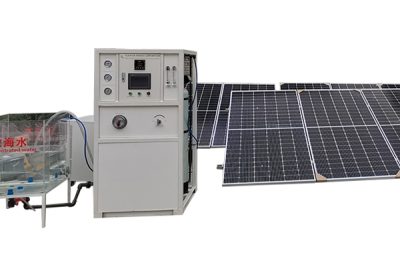
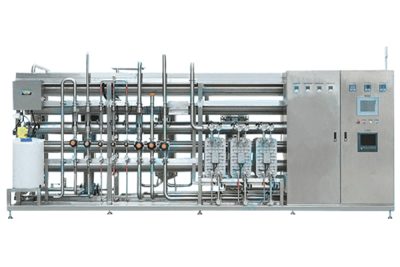
Kysearo is a professional manufacturer of RO water treatment plants, dedicated to providing customers with efficient and reliable reverse osmosis water treatment solutions and services. Our RO systems effectively remove impurities such as ions, molecules, and bacteria from water, making them widely applicable across industries including electronics, pharmaceuticals, food and beverage, and power generation, as well as in community drinking water and desalinizarea apei salmastre și seawater desalination.
We emphasize system cost-effectiveness, high efficiency, and ease of operation, offering comprehensive technical support from design and manufacturing through installation and commissioning.



Why Choose KYsearo?
KYsearo is an eco-friendly high-tech enterprise that integrates the research, development, production, and sales of RO water treatment equipment and accessories. Its products cover systems such as reverse osmosis, ultrafiltration, EDI, seawater desalination, as well as mechanical filters, activated carbon filters, and other accessories.
These products are widely used in industries such as electronics, electroplating, power plants, and pharmaceuticals, and their quality and performance are in line with well-known European and American brands. The company provides customized solution design, precise equipment selection, on-site construction and installation, as well as 7×24-hour after-sales technical support, ensuring efficient and stable operation of the equipment and quickly resolving customer issues.
What is a RO water treatment plant?
Reverse Osmosis (RO) is an advanced purification process that deceives semi permeable membrane technology to remove impurities from water! This ability has the benefits of easy manipulation, stable stillness, and economical operation. It can efficiently remove more than 99% of dissolved solids, organic pollutants, bacteria, and heat sources.
According to the water production rate and RO clean water equipment, it can be divided into:
Commercial RO system: produces 100-2000 liters of water per hour.
Industrial RO system: producing over 2000 liters of water per hour;
According to the type of water source, RO systems are further divided into:
1. Municipal tap water RO membrane purification system: TDS value 50-500 ppm
2. Brackish water RO Desalination (BWRO): TDS value>1000 ppm
3. Seawater RO desalination (SWRO): (TDS value 20000-50000 ppm
How does ro water treatment plant work?
Reverse osmosis is an efficient membrane separation technique, and its core principle is to apply external pressure higher than the natural osmotic pressure, causing water molecules to migrate from a high-concentration solution to a low-concentration solution against the concentration gradient, thereby achieving impurity separation. This technology utilizes the selective permeability of semipermeable membranes, allowing water molecules to pass through under pressure, while retaining contaminants such as dissolved salts, bacteria, and organic matter;
The reverse osmosis process requires two fundamental conditions: firstly, the operating pressure must be higher than the osmotic pressure of the solution (typically 1.5-10.5 MPa), and secondly, a high-performance semipermeable membrane must be available! This membrane possesses high water permeability and selectivity, enabling effective separation of solvents and solutes in water!
What are the RO water treatment Plant process?
The water supply system usually adopts a multi critical water quality control process to ensure the safety of the final water use; The stages include: flocculation → agitation flocculation → precipitation → filtration → deep filtration or membrane separation → disinfection ;
A complete water treatment process typically includes multiple physical, chemical, and biological treatment units. The pretreatment stage involves processes such as screen filtration, sedimentation, or air flotation, aimed at removing large suspended solids and scum.
The core of solid-liquid separation involves sedimentation and filtration. In the sedimentation tank, heavier flocculated particles settle to the bottom, while the supernatant is further purified through sand filtration, activated carbon filtration, or membrane filtration. In the disinfection and sterilization stage, chlorine, ultraviolet light, or ozone are used to inactivate pathogenic microorganisms in the water.
In this process, reverse osmosis (RO) is often used as the focal desalination unit, capable of removing over 98% of soluble salts, with a system desalination rate typically exceeding 97%. The pretreatment process is crucial for the RO system, typically including facilities such as quartz sand filtration, activated carbon adsorption, and precision filtration, aimed at meeting the inlet water requirements of the RO membrane (SDI<5)
 What are the application of ro water treatment plant?
In addition to traditional filtration, RO technology can also be used to treat recycled water, brackish water, and seawater desalination, and is widely used in fields such as drinking water production, food and beverage, power generation cooling, and agricultural irrigation.
What is ultrafiltration UF pure water treatment process?
Ultrafiltration (UF) is a tight purification method that filters water through a semi permeable membrane. It can retain suspended solids and high molecular weight solutes, allowing water and low molecular weight solutes to pass through the membrane and enter the permeate side; UF is commonly used to remove bacteria, colloids, and other particles, and is an important component of industrial and municipal water management;
What is the difference between ultrafiltration assembly and reverse osmosis technology?
Ultrafiltration (UF) assembly is another pressure membrane separation technology. Its working principle is based on the pore size screening effect, with a filtration accuracy of approximately 0.005-0.01 microns, which can effectively remove particles, bacteria, and high molecular weight organic matter from water. Compared to reverse osmosis, ultrafiltration membranes have larger pore sizes and operate at lower pressures (typically ≤0.5 MPa), and cannot remove soluble small molecular substances such as inorganic salts;
The characteristics of ultrafiltration technology include: no phase change during the separation process, operation at room temperature, good chemical stability, and a wide range of acid and alkali resistance (proper pH range of 2-13)! Ultrafiltration is often used as a pretreatment unit for reverse osmosis, to remove macromolecular substances and colloids, and to protect subsequent RO membranes from fouling and clogging!

What are the commonly used chemical agents in water treatment process?
The chemicals used in water treatment can be categorized into multiple types based on their effectiveness; disinfectants such as chlorine, chlorine dioxide, and ozone are used to inactivate microorganisms in water! Coagulants such as polyaluminium chloride (PAC) promote the destabilization and coagulation of colloidal particles. pH adjusters include hydrochloric acid, soda ash (sodium carbonate), and sodium hydroxide, used to optimize treatment conditions. Oxidizers such as potassium permanganate can be used to remove iron, manganese, and organic matter! Scale inhibitors prevent membrane fouling in reverse osmosis systems! Reducing agents such as sodium bisulfite are used to remove residual chlorine and protect RO membranes; the selection of these chemicals depends on the quality of raw water, treatment objectives, and process characteristics. The dosage needs to be carefully controlled to ensure treatment results and prevent secondary pollution!
What shall we considered in the operation and maintenance of the ro water treatment plant?
The stable operation of a reverse osmosis system requires comprehensive maintenance strategies! Daily monitoring includes recording the conductivity of the produced water, pressure and flow parameters at various points, and abnormal fluctuations may indicate membrane fouling or system malfunction!
Membrane cleaning and conditioning are crucial for maintaining the inherent function of the system. Chemical cleaning is necessary when the standardized water production decreases by 10% or the pressure drop increases by 15%. The cleaning system typically includes a cleaning water tank, pump, and precision filter. Cleaning agents are selected based on the nature of the contaminants, with acidic (for removing inorganic scale) or alkaline (for removing organic matter) cleaners being used accordingly;
When not in use for a long period, protective solution should be injected to prevent microbial growth; during normal operation, the lifespan of the reverse osmosis membrane can reach over 12 months, and with proper maintenance, it can be extended to 3-5 years;
What is the installation of ro water treatment plant?
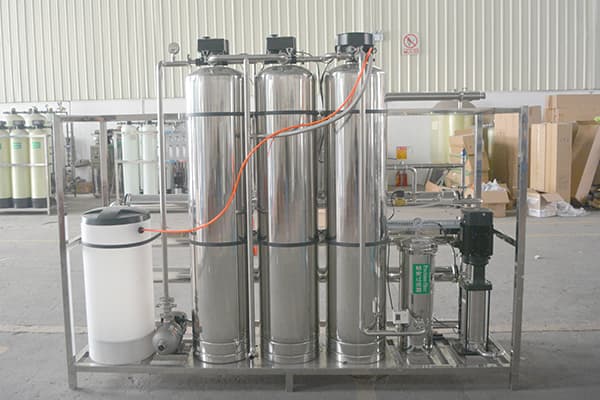
Small scale water control equipment can be directly designed with a pry up style, which is plug and play and easy to install. Large scale projects require on-site construction, debugging, and training of technical personnel by a team of engineers to ensure efficient operation!
What is the future outlook for the application of membrane technology in water treatment?
Membrane separation technology, especially reverse osmosis (RO) and ultrafiltration, has become the core technology of modern water treatment! RO has shown its superior performance in the field of seawater desalination. About 30% of seawater desalination plants worldwide adopt RO technology, which can remove more than 99% of the salt in seawater;
Future development trends include the development of low-pressure, low-energy consumption, and anti-pollution membrane materials, optimization of membrane module structures to enhance water production rates, and integration of intelligent monitoring systems! New hybrid membranes and organic-inorganic composite membrane materials are expected to further improve separation performance and anti-pollution capabilities, expanding the application scope of membrane technology in the sustainable utilization of water resources.
Get The Solution Today!
 Romanian
  English
  Arabic
  Spanish
  Russian
  Danish
  German
  Indonesian
  Vietnamese
  Turkish
  Thai
Thai  Italian