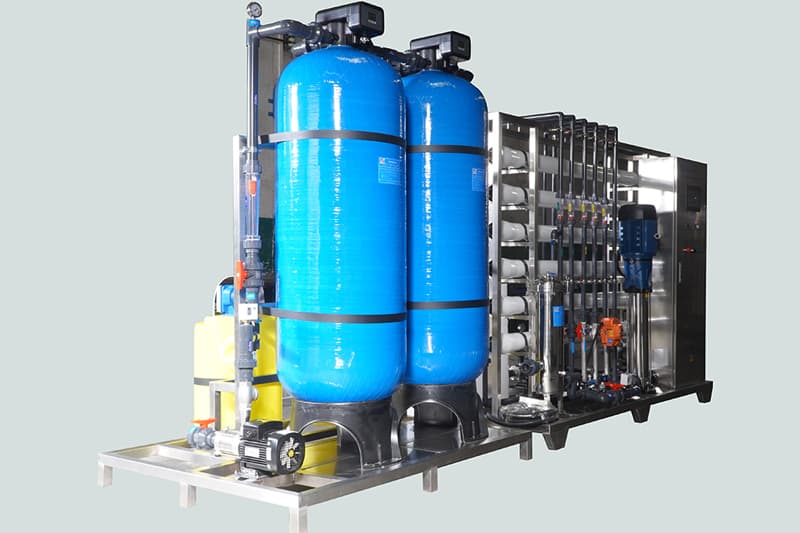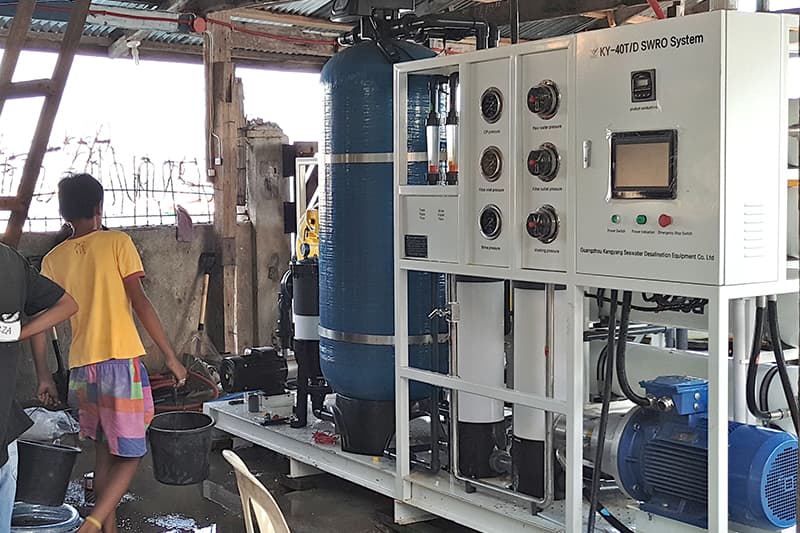

Las instalaciones de captación de agua de mar se clasifican básicamente en tres tipos: captación en pozos de playa, captación de agua subterránea y captación de agua de mar abierta. En este artículo se examinan las opciones tecnológicas de captación de agua de mar disponibles para plantas desalinizadorasy revisará las tecnologías empleadas para suministrar una cantidad fiable de agua de mar de la mejor calidad disponible.
1. Toma del pozo de la playa
Beach well intake means that seawater out from intake well constructed as close to the coastline as possible is filtered by seabed as the water source of desalination plant. This kind of seawater is especially attracted by seawater desalination reverse osmosis plant with the advantages of low turbidity and good quality due to particles in sea water are trapped from natural filtration. Seawater desalination intake project is the vital part of desalination plant, which is to ensure that sufficient, consistent and reliable feed water can be delivered for seawater desalination plant within the entire lifetime. The intake facilities and construction of intake structure both have important impact on seawater desalination plant investment, production cost, system operation stably and ecological environment. Investment of seawater desalination, scale of construction, and process for water quality requirements should be taken into consideration while developing intake projects. At the same time, water intake and its facilities are selected based on hydrology water quality in intake area, geology conditions, meteorological data and natural disaster.
2. Subsurface Water Intake
The deep seawater of open ocean is delivered to the shore-side through building intake pipes and then supplied to desalination project by pump plant constructed in the coastline, this is called” subsurface water intake”. Generally speaking, when sea level below 1~6m, intake water contains small fish, water grass, seaweed and other microorganism, thus water quality is not good. The content of these materials is 20 times reduction when intake level is above beneath sea level 35m, and water quality is good, which can greatly reduce the operating cost of the pre-treatment equipment. Meanwhile, water temperature in subsurface is lower, benefit to thermal seawater desalination process. This kind of intake is usually adopted on areas where seabed is quite precipitous, which is within 50 m from the coast and water depth up to 35 m.
3. Open Sea Water Intake
Open sea water intake is the most common intake project. Although its water quality not good, it is still widely adopted due to advantages of small investment, wide application range and full application experience.
Conclusión
Instalaciones de admisión para seawater desalination project se clasifican básicamente en los tres tipos anteriores: captación en pozo de playa, captación de agua subterránea y captación de agua en mar abierto. La captación de pozos en la playa puede suministrar agua bruta de buena calidad, lo que reduce la inversión y el coste de funcionamiento del equipo de pretratamiento. No obstante, al realizar la captación deben tenerse en cuenta la estructura geológica marina, la calidad hidrológica del agua y los factores de inestabilidad de la calidad del agua, y confirmarse tras una investigación en profundidad. La toma de agua subterránea es capaz de suministrar agua bastante buena, pero este tipo de toma probablemente se adopte menos debido a su gran inversión y complicada construcción. La toma de agua de mar a cielo abierto es un método de toma más popular que puede utilizarse en distintos proyectos de desalinización de agua de mar.
While designing seawater intake project, We should comprehensively take corrosion of metallic materials in seawater, sea creatures and the influence of tides into consideration.
Recent Projects
Obtenga una solución hoy mismo
 Spanish
  English
  Arabic
  Russian
  Danish
  German
  Indonesian
  Romanian
  Vietnamese
  Turkish
  Thai
Thai  Italian