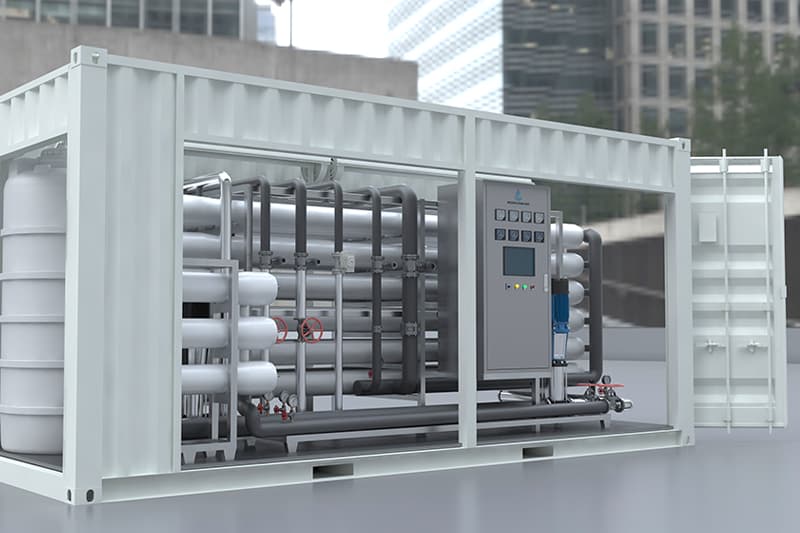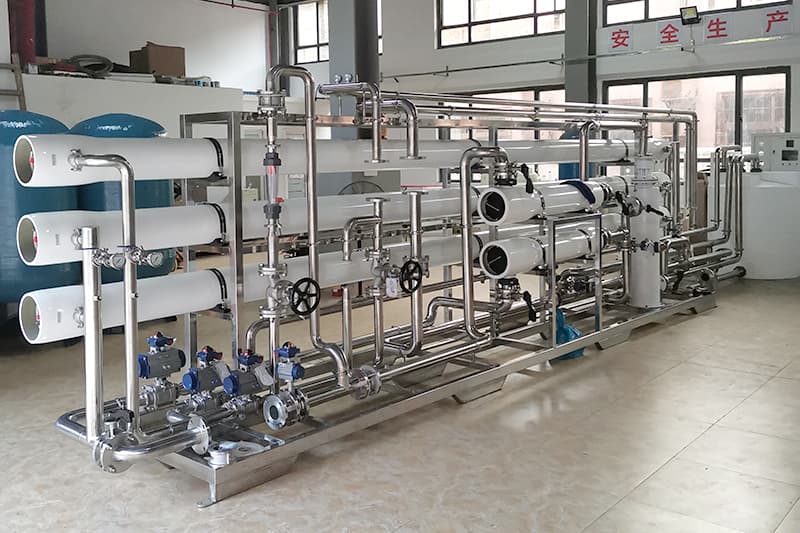

Under the increasingly scarce global water resources, ocean water desalination has become an important way to alleviate the problem of freshwater supply! Reverse osmosis technology has become the mainstream choice due to its high efficiency.
What is a ocean water desalination plant?
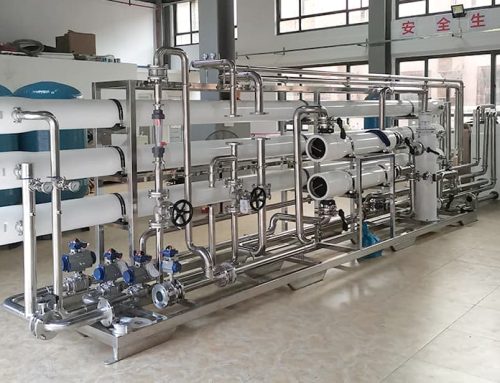
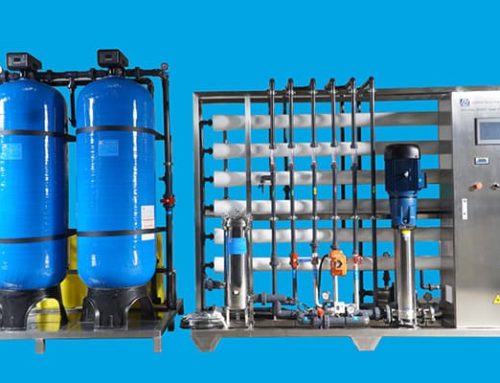
Reverse osmosis ocean water desalination plant is a device that deceives semi permeable membranes to intercept salt and dissolve impurities under high pressure, allowing only water molecules to pass through. Different from traditional distillation, RO relies on physical membrane separation rather than phase change, thus having advantages and disadvantages in terms of energy consumption, land occupation, and equipment complexity.
How does ocean water desalination plant work?
The ocean water desalination plant deceives the principle of reverse osmosis, which applies pressure to seawater through a high-pressure pump, causing water molecules to reverse osmosis through a semi permeable membrane, thereby separating salt and impurities; This ability can increase or decrease the salt content of seawater from about 36000 milligrams per liter to below 200 milligrams per liter, with a desalination rate of up to 99% or more, and the quality of the produced water is better than that of ordinary tap water!
The focus of reverse osmosis lies in the selective permeability of semi permeable membranes; In the natural permeation process, solvents in dilute solutions will naturally roll through the semi permeable membrane towards the concentrated solution side until the liquid level difference on both sides forms osmotic pressure equilibrium.
 What are the desalintion process of ocean water?
The treatment process of reverse osmosis ocean water desalination plant is a multi-stage precision process, mainly involving the following facilities:
- Water fetching : Extracting raw seawater from the ocean!
- Pre treatment: Remove suspended solids, algae, and microorganisms from seawater through multi-media filters, compact filters, etc., and prevent biological pollution!
- High pressure pump pressurization: Use a high-pressure pump to pressurize the pre treated seawater to a working pressure of 5.5-6.8 MPa.
- Reverse osmosis desalination: High pressure seawater passes through reverse osmosis membrane components, and water molecules are driven by pressure to permeate through the membrane into fresh water, while salt and impurities are retained;
- Energy Recovery: Utilizing energy recovery assembly to accept hydraulic energy from concentrated saltwater and reduce system energy consumption!
- Post treatment: mineralize and disinfect the produced water to achieve the drinking water method;
- Concentrated saltwater discharge: Inject the separated concentrated saltwater back into the ocean through a diffuser to ensure rapid mixing and reduce environmental sensitivity;
How does reverse osmosis RO membrane work?
Reverse osmosis membrane is the core component of seawater desalination, and its working mechanism is based on the principle of selective separation. Reverse osmosis membranes have extremely fine pore sizes (0.1-1 nanometer), which can effectively block larger molecules such as hydrated salt ions and allow only water molecules to pass through;
Under standard conditions of 25 ℃, the osmotic pressure of seawater is approximately 2.5MPa. Reverse osmosis programming applies a manipulation pressure of 5.5-6.8 MPa to create a reverse osmosis pressure gradient for water molecules through the polyamide composite membrane!
Modern reverse osmosis membrane components often adopt roll type composite membranes or Dow SW series membrane elements, which have the characteristics of high desalination rate, anti pollution, etc., and can adapt to the harsh environmental requirements of ships, islands, etc!
 Why is pre-processing crucial in the process of ocean water desalination plant?
The preprocessing system is a key link to ensure the long-term stable operation of the reverse osmosis system; The pre-treatment of seawater needs to address the following challenges: there are a large number of microorganisms, bacteria, and algae in seawater, and their reproduction can affect the normal operation of the facility. The turbidity of seawater varies greatly with tides, which can cause the pre-treatment process to be unstable. Seawater has strong corrosiveness and special requirements for equipment materials!
Pre treatment usually adopts a multi-stage filtration process of “multi-media filter+ultrafiltration+compact filter”, aiming to remove colloids and suspended impurities in seawater, reduce the pollution index (FI value) to the inlet requirements of reverse osmosis membrane (SDI<3), and effectively prolong the service life of reverse osmosis membrane; Pre treatment also includes sterilization and algae killing treatment. Some projects adopt seawater sodium hypochlorite generators, which produce sodium hypochlorite by electrolyzing seawater, effectively killing bacteria, algae, and microorganisms in seawater.
Can we drink ocean water directly?
After undergoing reverse osmosis seawater desalination treatment, the water quality is pure and the salt content is significantly reduced. It usually requires post-treatment before it can be consumed directly; Post treatment includes facilities such as mineralization regulation and disinfection, which are used to regulate the hardness and alkalinity of water and supplement essential minerals for the human body, making the water quality suitable for the WHO drinking water method!
The fresh water quality produced by the reverse osmosis device is better than that of ordinary tap water and the satisfactory drinking water method; Taking Israel as an example, the country has met 60% of the country’s water demand through the application of large-scale seawater desalination plants, and the quality of the produced water fully meets the standards of livelihood and drinking water laws!
It should be noted that seawater is not acceptable and can be consumed directly after simple boiling! Boiling can only kill bacteria, but cannot remove salt and minerals from seawater;

Can boiling ocean water be drinkable?
Simply boiling seawater will evaporate water, leaving behind higher concentrations of salt. If there is no accompanying distillation and condensation device to recover steam and condense it into fresh water, it cannot be consumed. Portable solar distillation or evaporative condensation systems can indeed produce small amounts of fresh water, but their production capacity and energy efficiency are inferior to RO systems in large-scale water supply.
Why the cost of ocean water desalination plant is high?
The cost of ocean water desalination plant mainly consists of energy consumption (driven by high-pressure pumps), investment in setting up (high-pressure and corrosion-resistant materials), membrane exchange and chemical consumption, as well as operation and maintenance (artificial, cleaning and monitoring); The high salt content of seawater requires higher operating pressure and more frequent maintenance, especially under conditions of oily or high turbidity inflow, which further increases costs;
How to deal with the brine water by ocean water desalination plant?
In the process of reverse osmosis ocean water desalination plant, about half of the ocean water is converted into fresh water, and the remaining becomes concentrated saltwater! The salinity of these concentrated saltwater is about twice that of ordinary seawater, and they need to be properly treated to prevent any impact on the environment.
The mainstream approach is to slowly inject concentrated saltwater back into the ocean through a diffuser. This method can promote rapid mixing of concentrated saltwater and seawater, reducing the impact on the local marine environment.

How can energy recovery improve the economy of ocean water desalination plants?
Energy consumption cost is one of the main operating costs of ocean water desalination plants! Ocean water desalination plants have significantly reduced operational energy consumption through energy absorption and assembly.
The main energy receiving devices are the grid power exchange energy receiving device and the hydraulic turbine energy recovery device. Taking the Jubail seawater desalination plant in Saudi Arabia as an example, the plant adopts energy recovery assembly and intelligent control system, which reduces operating energy consumption by 30% compared to traditional processes!
With the maturity of new technologies such as photovoltaic reverse osmosis coupling, the energy consumption of ocean water desalination has been reduced by 80% compared to earlier stages, and the cost has further decreased; The cost of modern seawater desalination is close to 3 yuan per ton, and with the advancement of technology, its economy will further improve;
Kesimpulan
Reverse osmosis ocean water desalination plant is the primary solution to address freshwater scarcity in coastal and arid regions. Although its initial investment and operating costs are relatively high, with the advancement of membrane technology, energy acceptance, and automated preparation, the economy and sustainability of RO solutions are gradually improving!
Get The Solution Today!
 Indonesian
  English
  Arabic
  Spanish
  Russian
  Danish
  German
  Romanian
  Vietnamese
  Turkish
  Thai
Thai  Italian