Water is the source of life, but the global shortage of water resources is becoming increasingly serious, and water with high salt content cannot be directly consumed or used. The technology of removing salt from water has become an important way to alleviate the freshwater crisis!
What is the principle of salt removal?
It refers to the process of removing soluble salts from water through physical or chemical means, with the focus on reducing the concentration of anions and cations in water to meet specific water quality requirements; The key objective for measuring the desalination effect is the desalination rate. For example, the formula for calculating the desalination rate of a reverse osmosis membrane is: (1- salt content in the produced water/salt content in the influent) × 100%;
According to the principle of judgment, teknologi desalinasi can be divided into three categories: membrane separation method, phase transformation method, and chemical displacement method; Membrane separation technology accommodates two mainstream processes, electrodialysis and reverse osmosis. Phase change rules are represented by distillation and freezing, while chemical displacement rules specifically refer to ion exchange technology;
| Technical Example | Salt Removal Rate | Applicable Salt Content Range | Main Advantages | Main Limitations |
|---|---|---|---|---|
| Reverse osmosis method | 98% -99.5% | Common application | Efficient desalination, compact equipment | High demand for inlet water quality and high cost |
| Electrodialysis method | Depending on configuration | 200-4000 mg/L | Low demand for influent turbidity | Energy consumption increases with increasing salt content |
| Ion exchange method | Over 95% | Low salt content (deep desalination) | Suitable for high-purity water preparation | Resin needs to be regenerated on schedule, and operating costs are affected by the consumption of regenerants |
| Multi effect evaporation | Efficient | High salinity water | Capable of handling high salinity water | High energy consumption, equipment prone to scaling |
| Forward osmosis method | In research | Experimental stage | Low energy consumption, no need for pressure | Insufficient technological maturity |
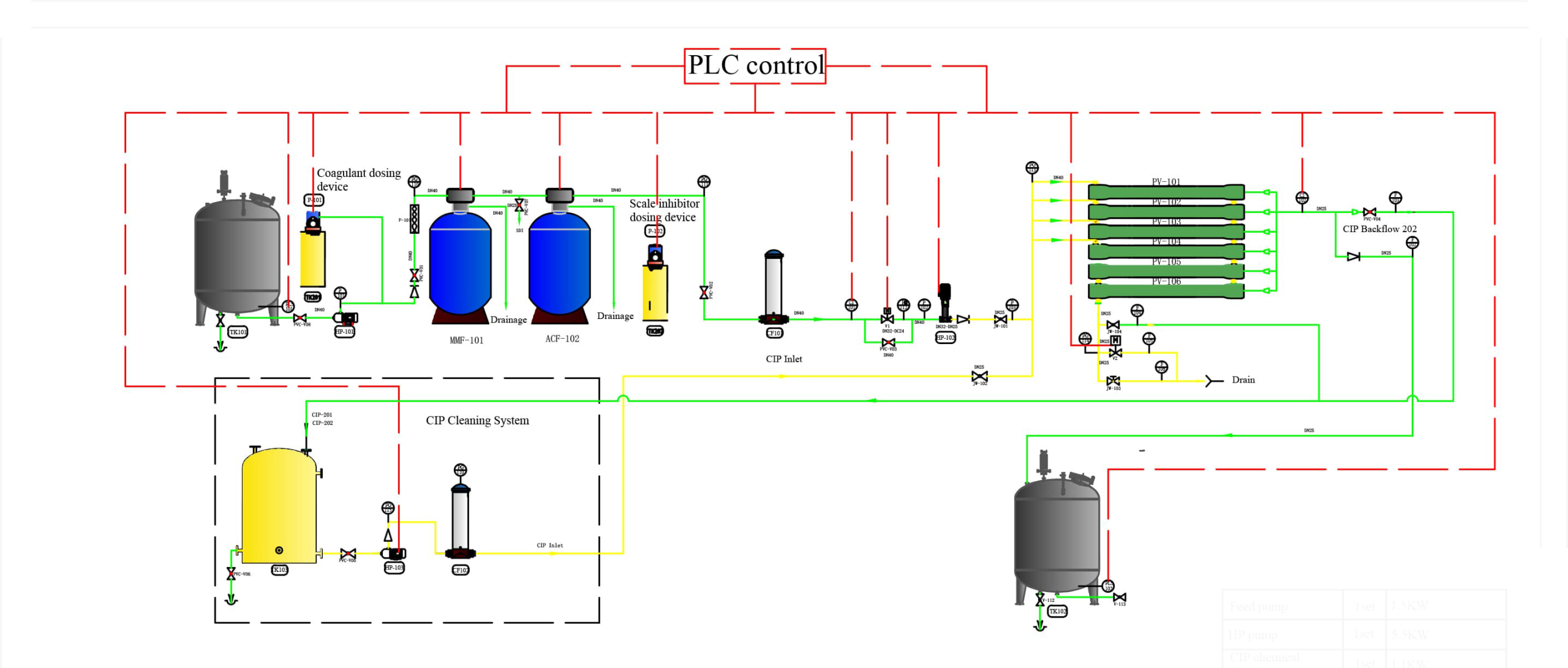
How does reverse osmosis achieve efficient desalination?
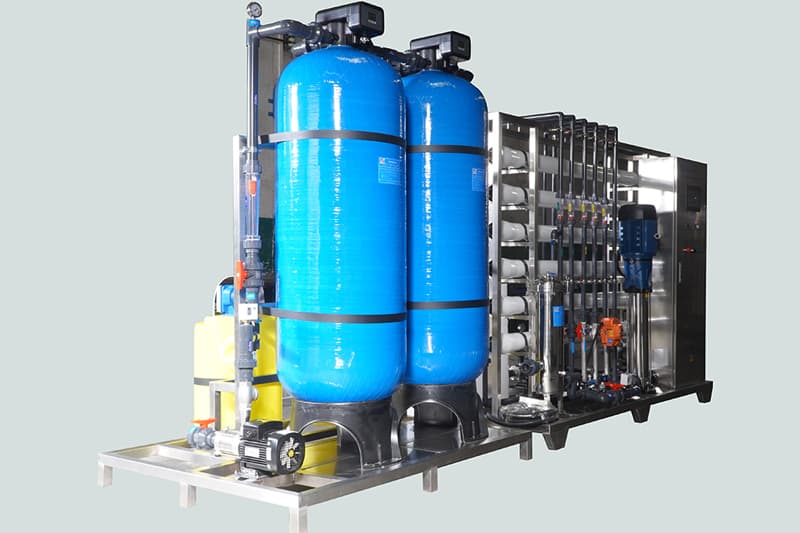
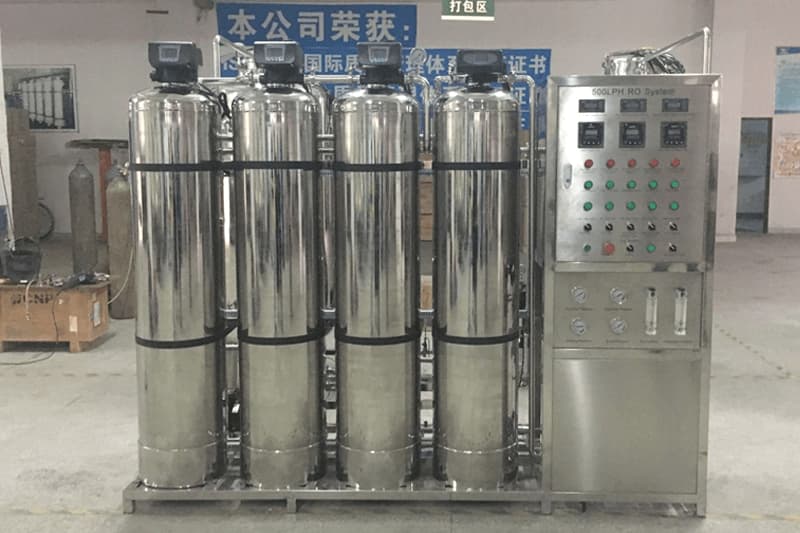
Reverse osmosis is a physical process that deceives semi permeable membranes to separate salt under pressure; This method utilizes asymmetric structured semi permeable membranes made of cellulose acetate or polyamide materials to achieve selective permeation of water molecules and salt ions under operating pressures ranging from 2.8-8.0 MPa;
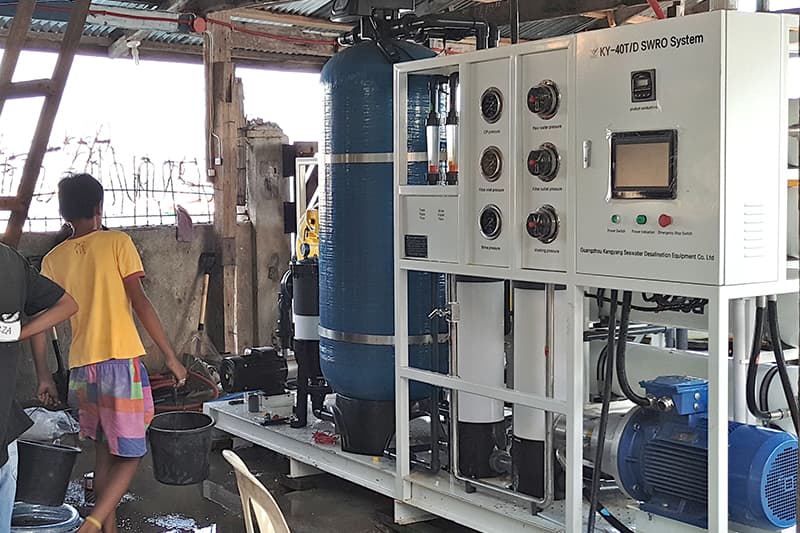
The contour of the reverse osmosis membrane is characterized by nanoscale pores, whose size is precisely controlled – only slightly larger than water molecules, but capable of effectively isolating salt ions dissolved in water. When seawater flows through the membrane surface under high pressure, water molecules enter the other side of the membrane through pores, while salt and impurities are retained and released, thus achieving the purpose of seawater reverse osmosis desalination plant . The ability of reverse osmosis is constantly upgrading, and China has successfully broken through the three major bottleneck technologies of reverse osmosis membrane and energy acceptance in domestically produced small and medium-sized seawater desalination assemblies! The desalination rate of the reverse osmosis membrane developed by Weihai City is as high as 99.8%, and the equipment has been widely used in deep-sea fishing boats, offshore islands, and various seawater desalination projects;
How is the manipulation of electrodialysis technology in desalination?
Electrodialysis is a technology that utilizes the selective permeability of anion/cation exchange membranes to achieve ion migration and separation under the action of a direct current electric field; The membrane stack structure with a distance between the concentrated water chamber and the fresh water chamber is configured. Under the drive of an electric field, anions and cations migrate towards opposite electrodes, but due to the selectivity of the ion exchange membrane, salt ions are retained in the concentrated water chamber, thus achieving desalination!
There are two main operating modes for electrodialysis: one-time (desalination is achieved by a single pass of raw water) and batch circulation (desalination is achieved by circulating raw water until the predetermined desalination rate is reached); This technology requires a turbidity requirement of less than 1 FTU for the incoming water, and the working current density needs to be controlled at 80-100 mA/cm ². It is suitable for water with a salt content of 200-4000 mg/L!
With the manipulation of EDR (Electrodialysis Rotation) integrated technology, the water utilization efficiency of electrodialysis has become comparable to reverse osmosis, and the demand for water quality control is lower than that of reverse osmosis, making it still competitive in specific application scenarios.

What are the features of ion exchange method in desalination?
The ion exchange method adopts a combination of strong acidic cation exchange resin and strong alkaline anion exchange resin for assembly. The functional groups of the resin replace cations such as Ca ² ⁺ and Na ⁺ in water and anions such as Cl ⁻ and SO ₄ ² ⁻ through reversible reactions;
The main feature of this method is a salt removal rate of over 95%, but the operating cost is greatly influenced by the consumption of regenerant; Invalid resins need to be regenerated regularly with 5-10% sulfuric acid, hydrochloric acid, or 4-5% sodium hydroxide solution. The regenerated waste liquid generated should be neutralized to prevent secondary pollution!
The ion exchange method is more suitable for small-scale high-purity water preparation systems, with higher requirements for influent salt content, and is suitable for deep desalination applications as water; Compared with membrane technology, ion exchange method has economic advantages in treating low salt water sources, but when the salt concentration in the water is high, the operating cost will be significantly increased!
What are the advances in phase change desalination technology?
The desalination ability of phase change method mainly includes distillation and freezing methods; Multi effect evaporation is an improved form of distillation method that utilizes the pressure reducing ability to lower the operating pressure and boiling point of the solution in the subsequent evaporator compared to the previous one, allowing the secondary steam extracted from the previous evaporator to serve as the heating steam for the subsequent one, thereby promoting the efficiency of thermal energy utilization.
Distillation method achieves phase change identification through multi effect evaporation, but it requires detailed investigation of thermal energy and is prone to equipment scaling problems; The freezing method uses a low temperature of -5 to -20 ℃ to freeze pure water, and residual concentrated salt water needs to be separately handled. Hydrate method is an emerging technology that produces solid crystalline hydrates by injecting gases such as propane into saltwater, but it is still in the laboratory validation stage.
Phase change technology has a relatively narrow practical application range due to high energy consumption or insufficient technological maturity. Distillation devices are often used for ship borne seawater desalination, while freezing methods are only seen in special scenarios such as polar scientific expeditions.
What is the new skill of forward osmosis method?
Forward osmosis (FO) is a membrane separation technology that reverses reverse osmosis! As a potential new technology for water purification and desalination, forward osmosis is being discussed and practiced from multiple perspectives and at a deeper level in the world.
The non pressurized adsorption permeation method (CN92110710.2) is a manipulation of forward osmosis that allows water to permeate through a porous membrane into a super absorbent adsorbent or salt concentration solution or solid material that is even ahead of seawater, without the need for external pressure! The additional salt “extract” in the solution is easily evaporated without adding too much heat!
The ability of forward osmosis has been manipulated for a long time, for example, people adopt salt to store food for a long time, because in high salt environments, most bacteria, molds, and pathogens will dehydrate and die or temporarily lose their activity due to osmosis; The forward osmosis membrane separation technology has been used in fields such as seawater desalination, sewage treatment, food processing, medicine, and especially in emergency rescue life support systems to produce fresh water.
What are the application of desalination technology?
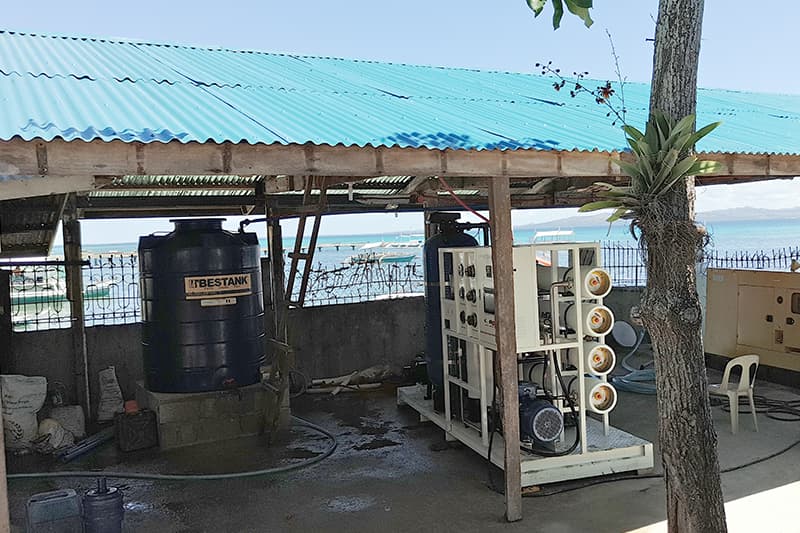
The ability to remove salt is also far-reaching in offshore platforms, offshore islands, and large-scale seawater desalination projects! In oil drilling platforms, Yongxing Island in Sansha, Xiaoqin Island in Yantai and other places, seawater desalination technology provides a reliable water source guarantee for local residents’ daily life and industrial production!
What is the future development trend of desalination technology?
The desalination technology will be developed in several main directions in the future: firstly, accelerating the improvement and application of equipment localization level, focusing on breakthroughs in the national production of key equipment such as high-performance seawater reverse osmosis membranes, large-scale seawater high-pressure pumps, and energy recovery assemblies. Domestic companies such as Walton Technology and Bishuiyuan have independently developed reverse osmosis membranes, which have been successfully applied in multiple seawater desalination projects and are gradually breaking the monopoly of foreign companies.
The second is to strive to improve the economic benefits of seawater desalination, deepen the research on the coupling technology of renewable energy and seawater desalination, and use renewable energy such as solar energy and ocean energy to provide power for seawater desalination and achieve “green electricity to green water”. Promote the application of high-quality seawater desalination, maintain optimal water use and price.
Thirdly, we will vigorously promote the comprehensive utilization of seawater resources, open up research on the extraction and utilization of strategic elements in seawater, deepen engineering technology research and demonstration for large-scale extraction of bromine and potassium from seawater, and increase the development of strategic mineral resources such as lithium and cesium in seawater; The ability of differentiated water supply has become a new direction, which is to meet the precise needs of marriage water through differentiated post-treatment! Supplementing moderate amounts of minerals in drinking water to enhance taste, while adopting multi-stage reverse osmosis technology in equipment cooling water to further reduce water conductivity and reduce the cost of equipment cooling systems!
With technological innovation and strategic support, desalination technology will play an increasingly important role in solving the shortage of water resources in coastal areas, achieving continuous utilization of water resources, and ensuring sustainable economic and social development!
Get The Solution Today!
 Indonesian
  English
  Arabic
  Spanish
  Russian
  Danish
  German
  Romanian
  Vietnamese
  Turkish
  Thai
Thai  Italian