
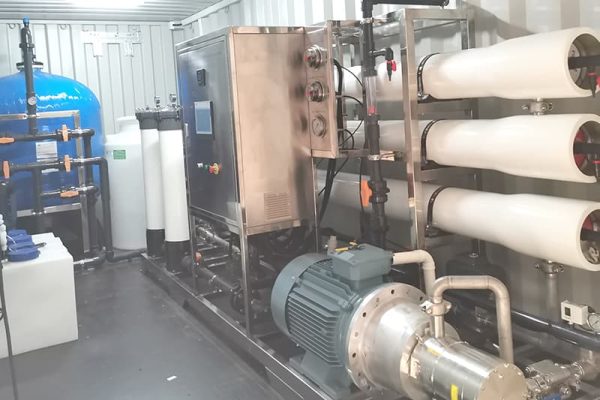
Containerized Reverse Osmosis Systems
- 10 feet: Average water production of 5– 20 tons/day
- 20 feet: Average water production of 20-100 tons/day
- 40 feet: Average water production of 100-500 tons/day
KYsearo containerized reverse osmosis systems are vital across varied industries, driven by the need for high-purity water and stringent regulatory conformity. They get rid of dissolved solids, virus, and particular ions, guaranteeing item high quality, functional performance, and environmental adherence. Our water treatment system supplies thorough tailored solutions, with container sizes and core parts developed according to customer needs.
Desalination rate: ≥99.5%
Water production energy consumption (kWh/ton): 2.8-3.2
Membrane module lifespan: 3-5 years

How dose containerized reverse Osmosis systems work?
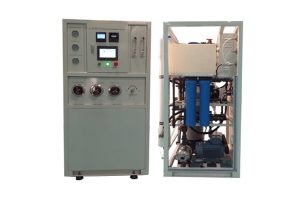
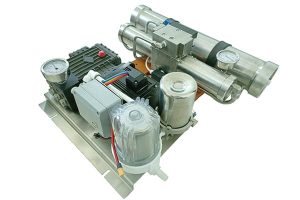
The inbound water first goes through a multimedia filter to eliminate sand and suspended solids ≥ 10 microns in size. If the water consists of chlorine or smells, it is after that travelled through a triggered carbon filter for adsorption. The water then goes through pretreatment by a water conditioner and scale inhibitor addition system to minimize water firmness and protect against membrane scaling. The pre-treated water is after that pressurized by a high-pressure pump to 1.5– 2.5 MPa and fed into the reverse osmosis membrane setting up for high-pressure transportation. Throughout the reverse osmosis separation stage, high-pressure water affects the semi-permeable membrane, enabling water particles to pass through to the low-pressure side to create product water, while impurities such as salts, hefty metals, and microorganisms are preserved and released with the wastewater. The item water gets in a UV disinfection unit or post-chlorination gadget for post-treatment sanitation, where 254 nm UV light damages bacterial DNA to remove microbes, fulfilling the GB 5749-2022 criterion; On the other hand, the system constantly keeps an eye on water high quality and devices status in real-time using a TDS meter, pH meter, and stress sensor. The PLC controller instantly causes an alarm and pauses operation when TDS exceeds restrictions or membrane layer pressure ends up being irregular, ensuring stable procedure.
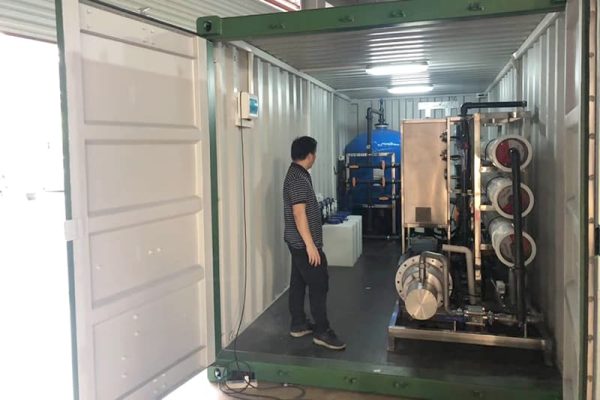
Containerized reverse Osmosis systems Component Choice
Commercial RO system style incorporates pre-treatment, membrane layer choice, and post-treatment to achieve water quality targets successfully, mostly securing RO membranes from fouling and destruction.
1. Pre-treatment Methods
Pre-treatment is paramount for RO system long life and efficiency. Inadequate pre-treatment triggers accelerated fouling, scaling, membrane layer damages, lowered permeate quality, and raised operational prices, while effective pre-treatment optimizes RO effectiveness and extends membrane life
2. Membrane layer Choice
Proper membrane layer option is critical for commercial applications, influencing efficiency, energy performance, and functional prices.] Industrial RO membranes are sophisticated semi-permeable tools removing liquified solids and pollutants. Setups vary, maximized for details feed water and treatment goals. Residential TF-Series membrane layers operate at reduced stress (50-65 psi) with 98% salt being rejected; TE-Series are NSF-58 accredited.
3. Post-treatment Processes
Commercial RO systems commonly call for post-treatment to meet final water high quality specifications, consisting of:
- pH modification: To counteract acidic penetrate.
- Degasification: To eliminate dissolved gases (e.g., CO2) that lower pH and create deterioration.
- Sanitation: For microbial safety (potable/sensitive industrial uses), through UV or chlorination.
- Polishing: Additionally filtration (EDI, mixed-bed ion exchange) for ultrapure water (e.g., semiconductor, pharmaceutical WFI).
- Remineralization: For drinking water, to restore vital minerals. RO is additionally incorporated into hybrid systems (UF, EDI, AOPs) to attain rigid water high quality target .

How to customized containerized reverse Osmosis systems?
1. Container dimension personalization: Three common dimensions are available– 10 feet, 20 feet, and 40 feet– and non-standard sizes can be customized based upon site room. The manufacturing
2. Practical component personalization:
- Consuming alcohol water applications: Mandatory UV disinfection + TDS tracking gadget (guarantees TDS ≤ 50 mg/L, certified with WHO drinking water criteria);.
- Industrial applications: Optional EDI ultra-pure water component (water resistivity ≥ 15 MΩ ・ cm, meets demands for electronic devices and pharmaceutical sectors);.
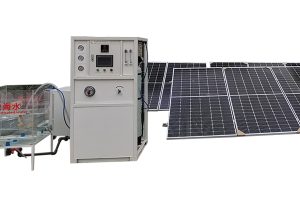
- Remote locations: Optional solar energy supply component (no grid needed, runs independently).
3. Control System Customization: Criterion setup includes PLC + Siemens touchscreen, supporting manual/automatic switching; if remote administration is needed, a 4G/5G remote surveillance component can be contributed to watch real-time information such as water manufacturing volume, TDS worths, and membrane stress, with automated informs for uncommon conditions.
Solar-powered containerized reverse Osmosis systems
Grid-independent, resolving supply of water difficulties in remote areas. In remote locations without grid coverage or disaster relief scenarios , typical electrically driven water therapy systems can not operate. The KYsero solar container-based salt water desalination unit counts exclusively on solar power generation to accomplish the conversion of “seawater/brackish water → drinking water,” perfectly dealing with the “no power, no water” issue.
Advantages:.
- Independent Operation: Outfitted with photovoltaic panels (power capacity configured based on manufacturing capability, e.g., 30kW photovoltaic panels for daily water production of 10 bunches) + power storage batteries; can run for 8– 12 hours on gloomy days making use of saved power;.
- Application Situations: According to data from the International Power Agency (IEA), around 1.1 billion people around the world reside in remote areas without steady power grids . This system has actually been used in areas such as Kenya in Africa and the Philippines in Southeast Asia, supplying alcohol consumption water for 2,000 people daily;.
- Environmental protection and no exhausts: No nonrenewable fuel source are eaten throughout the process, and only a percentage of high-salt wastewater is sent out (which can be normally dealt with dissipation fish ponds without polluting the environment).
- Performance Parameters: Taking the 20-foot solar model as an instance, it generates an average of 20 lots of water daily, with a solar conversion effectiveness of ≥ 18%, and a battery storage ability of 100kWh. Under common sunny problems with 4 hours of sunshine, it can satisfy the entire day’s functional demands.
How is power supply for containerized reverse Osmosis systems?
Flexible Power Supply + Global Voltage Compatibility: No added alterations required for cross-border projects. Grid voltages and regularities differ across countries/regions (e.g., China: 220V/50Hz, USA: 110V/60Hz, industrial projects generally use 480V/60Hz). Conventional water therapy systems need additional transformer alterations, boosting expenses and posing safety and security dangers. The KYSEARO system features a wide-range power supply style, allowing compatibility with the majority of international grid criteria without adjustments.
Power supply parameters:.
- Voltage: 220V-480V (single-phase/three-phase optional, three-phase advised for commercial jobs);.
- Frequency: 50Hz/60Hz (immediately adapts, no guidebook changing required);.
- Protection rating: Electric closet IP54 protection, allowing safe procedure in humid and dusty environments.
How are the containerized reverse Osmosis systems from installment to maintenance?
From installment to maintenance , minimizing operational complexity. The long-term steady operation of water treatment systems relies upon expert upkeep services. KYSEARO supplies a ” setup – training – maintenance – upgrade” full-cycle service , making it possible for also customers without professional technical workers to quickly manage the system. Proof:.
- Start-up Phase: Supply detailed “Operating Handbook” and “Maintenance Guide,” and arrange on-site training by engineers (1-2 days) to make sure users master standard procedures such as “everyday inspections, chemical enhancement, and data checking out”;.
- Maintenance Phase: Regular Maintenance: Based on use frequency, change filters and check membrane layer standing every 3-6 months, and carry out 1 CIP membrane layer cleansing yearly;.
- Remote Support: Via the remote tracking system, engineers can identify concerns in real-time, with over 90% of small concerns fixed by means of remote guidance, decreasing downtime losses;.
KYsero’s containerized reverse osmosis system is the favored service for emergency situation water system, commercial pure water, and water therapy in remote locations. Whether it’s a little town with an everyday water manufacturing of 5 bunches or a huge industrial task with a daily water production of 500 bunches, customized arrangements can fulfill the demands. Combined with full-cycle solution support and international voltage compatibility, this more decreases the customer’s entrance obstacles and operational dangers. If you are facing issues such as “low water treatment efficiency, high expenses, and bad adaptability,” do not hesitate to speak to the KYSEARO team– we will certainly provide free remedy layout and water quality screening services based on your raw water quality, water manufacturing needs, and budget, enabling you to promptly acquire a steady and effective water therapy solution.
Get A Quote Now!
Produk Terkait

 Indonesian
  English
  Arabic
  Spanish
  Russian
  Danish
  German
  Romanian
  Vietnamese
  Turkish
  Thai
Thai  Italian