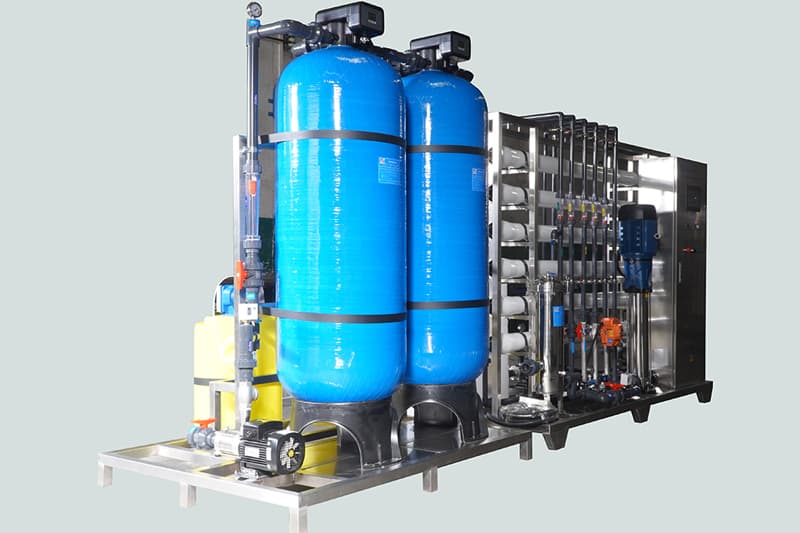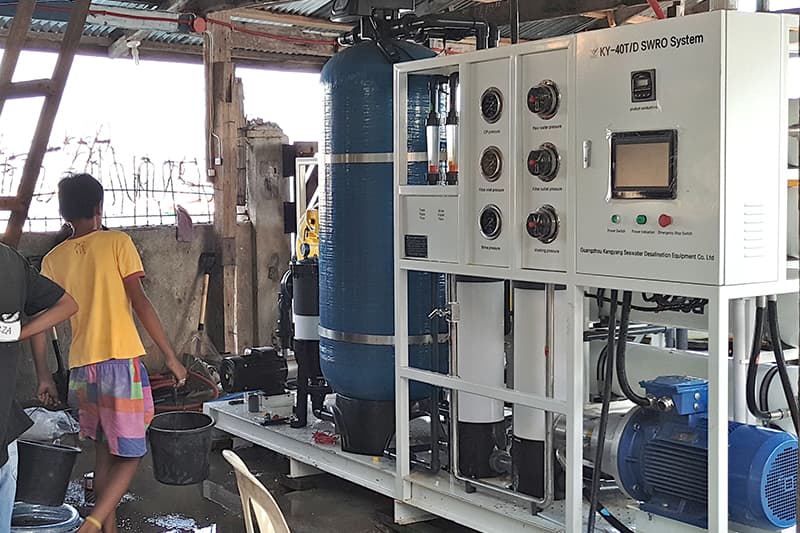

Confronted by an increasingly severe global freshwater crisis, this nation of over 7,000 islands is transforming the vast oceans into sustainable drinking water sources through technological innovation and strategic investment.
As an archipelagic nation comprising over 7,000 islands, the Philippines faces unique and formidable challenges in providing stable, reliable access to clean water for its citizens.
As global water scarcity intensifies—with the World Meteorological Organization projecting 5 billion people will face water shortages by 2050—desalination technology offers a promising solution for coastal and remote regions constrained by limited freshwater resources.
In the Philippines, where over one-quarter of the population resides in areas with severe water scarcity, seawater desalination has become not only a vital means to address drinking water shortages but also critical infrastructure supporting national economic development and climate resilience.
1. What Is Seawater Desalination?
Seawater esalination is the process of producing potable freshwater by removing salts and impurities from seawater through a series of physical and chemical methods. This technology is vital for coastal regions abundant in seawater but scarce in freshwater resources.
Globally, over 20 desalination technologies exist, primarily categorized into distillation (thermal methods) and membrane methods. Among these, reverse osmosis (RO), multistage flash (MSF), and multi-effect distillation (MED) are currently the mainstream desalination technologies worldwide.
Reverse osmosis falls under membrane-based methods, applying high pressure to force seawater through a semi-permeable membrane, thereby removing salts and other impurities. The entire process takes only about 20-30 minutes. Multi-stage flash and multi-effect distillation, however, are thermal methods requiring seawater to be heated to a specific temperature before entering an evaporation chamber for vaporization and condensation separation. These desalination cycles are longer, typically taking several hours.
2. Water Resource Challenges and Demands in the Philippines
As an archipelagic nation, the Philippines’ geography dictates limited and unevenly distributed traditional freshwater resources. United Nations reports indicate global water consumption has reached six times its level a century ago, with projections showing a further 20% to 50% increase by 2050.
Over one-quarter of the world’s population lives in areas of severe water scarcity, a challenge particularly acute in the Philippines. Many islands lack natural freshwater sources, relying instead on rainwater harvesting or ship-borne deliveries—costly and unreliable solutions.
Climate change exacerbates water scarcity, with altered rainfall patterns and rising sea levels accelerating freshwater aquifer salinization in coastal areas. This makes desalination a strategic choice for enhancing climate resilience in the Philippines.
Additionally, economic development drives growing water demand. Industrial expansion, tourism growth, and population increase all require reliable water resources, with desalination providing the Philippines a stable, climate-independent water source.
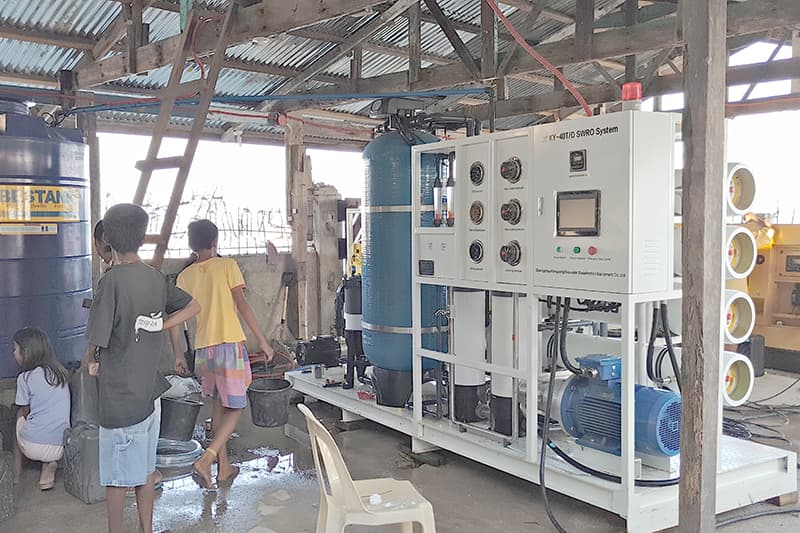
3. Technical Solutions of Seawater Desalination
Reverse osmosis stands as one of the most widely applied desalination methods today. It utilizes a semi-permeable membrane that allows only the solvent (water) to pass through while blocking solutes (salts), separating seawater from freshwater
By applying an external pressure greater than the osmotic pressure of seawater to the seawater side, pure water from seawater is reverse-osmosed into freshwater. The primary advantage of this method is energy efficiency, consuming only half the energy of electrodialysis and one-fortieth that of distillation.
Multi-stage flash and low-temperature multi-effect distillation technologies belong to thermal methods, achieving desalination through multiple evaporation and condensation cycles within evaporation chambers. These technologies are mature and operationally reliable, particularly suited for large-scale applications.
Multi-stage flash and low-temperature multi-effect distillation technologies belong to thermal methods. They achieve desalination by repeatedly evaporating and condensing seawater within evaporation chambers. These technologies are mature and reliable, particularly suited for large-scale and ultra-large desalination plants.
Below is a comparison of major seawater desalination technologies:
| Technology | Advantages | Disadvantages | Application |
|---|---|---|---|
| Reverse Osmosis | Low investment, low energy consumption | High requirements for seawater pretreatment | Small to medium-sized projects |
| Thermal Process (MSF) | Mature technology, reliable operation, high plant capacity | Relatively high energy consumption | Large-scale industrial projects |
| Thermal Methods (MED) | Energy-efficient, low seawater pretreatment requirements, high-quality desalinated water | Requires both electrical and thermal energy inputs | Large-scale industrial projects |
| การกำจัดเกลือด้วยพลังงานแสงอาทิตย์ | No conventional energy consumption, pollution-free, high freshwater purity | Limited by climatic conditions | Remote areas, islands |
4. Advantages and Disdvantages of Desalination Technologies
Desalination technologies offer the Philippines multiple strategic advantages. First, they provide a reliable freshwater source, free from seasonal rainfall fluctuations and climate change impacts.
Second, desalination enhances the Philippines’ climate resilience, playing a critical role in addressing droughts and water shortages. As residents of Liuheng Island state: “The sea will never run dry. With seawater, we have freshwater.”
Additionally, desalination alleviates pressure on traditional freshwater resources, allowing groundwater and reservoirs to recover and be managed sustainably.
Economically, desalination drives growth by attracting businesses to coastal areas. For instance, after China’s Liuheng Island implemented desalination, industrial output surged from 10 billion to nearly 20 billion yuan.
However, desalination faces challenges. High initial investment costs remain a major hurdle, especially for large-scale projects.
Energy consumption remains a significant concern. Although reverse osmosis energy usage has decreased from over 20 kWh to below 4 kWh per ton, it still qualifies as an energy-intensive process.
Regarding environmental considerations, the potential impacts of brine disposal require careful management. Discharging high-temperature, high-salinity wastewater containing chemical additives directly into the ocean may adversely affect marine ecosystems.
5. Innovative Technologies and Applications
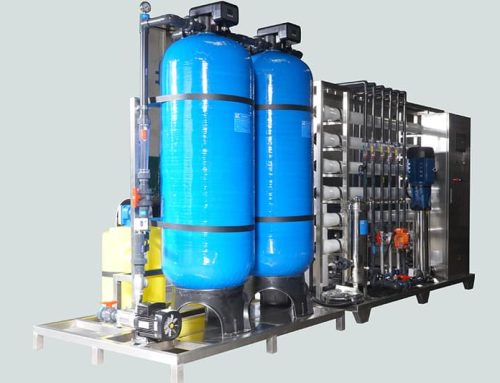
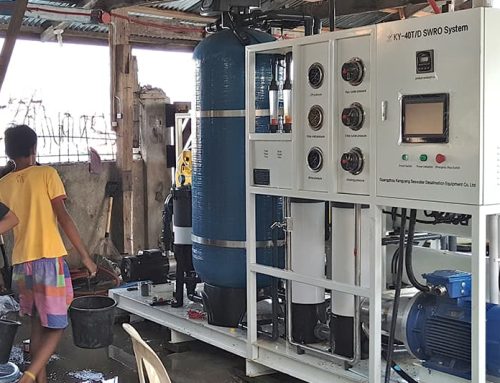
The Philippines employs diverse desalination technologies, encompassing various portable and stationary ระบบการแยกเกลือออกจากน้ำทะเล. These systems adapt to the specific needs of different islands and communities.
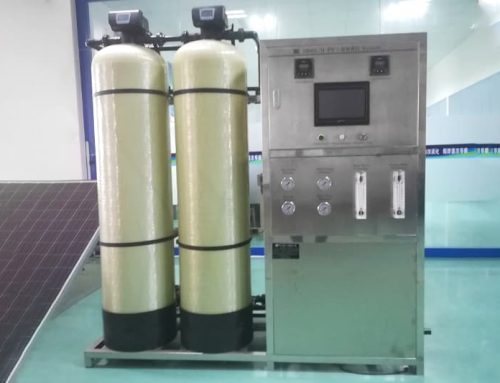
Containerized water treatment systems represent a promising innovation, operating independently of the grid by directly utilizing clean energy sources like wind and solar power for desalination. Such systems are particularly suitable for coastal regions and islands in the Philippines, offering broad development prospects and excellent comprehensive benefits.
Reverse osmosis (RO) technology has become the mainstream choice for desalination in the Philippines due to its low investment and operating costs. With improvements in membrane performance and decreasing prices, RO has emerged as the most economically viable desalination method.
Thermal membrane co-generation (MED-RO or MSF-RO configurations) represents another viable technological pathway for the Philippines. This integrated approach can meet diverse water demands, reduce desalination costs, and enable shared seawater intake points.
Notably, the Philippines is actively exploring renewable energy coupled desalination technologies. By harnessing clean energy sources like solar and wind power to drive desalination processes, operational costs and environmental impacts can be further minimized.
6. Balancing Environmental and Economic Benefits
The development of desalination in the Philippines must fully consider environmental sustainability. In recent years, technological innovations have significantly reduced the energy consumption and environmental impact of desalination.
To address brine discharge concerns, modern desalination plants implement multiple measures to minimize impacts on marine ecosystems. These include conducting preliminary marine environmental impact assessments and post-operation evaluations, as well as selecting appropriate discharge points and diffuser designs.
Economically, desalination costs continue to decline. The typical large-scale reverse osmosis desalination cost per ton of water fell from $1.02 in 1985 to 48 cents in 2005. Singapore has even reduced desalination costs to $0.49 per cubic meter.
The Philippine government may subsidize desalinated water to ensure residential water rates remain unaffected by desalination costs. Such subsidy policies are adopted in many countries, including Spain and Italy.
Furthermore, the economic benefits of desalination extend far beyond water supply itself. It supports tourism development, industrial growth, and agricultural productivity, creating jobs and promoting regional economic development.
7. Future Development Directions and Prospects
With technological advancements, Philippine desalination plants are becoming more efficient and environmentally friendly. Technological innovation is the driving force behind the industrialization of desalination. In the future, the Philippines may focus on developing ultra-large-scale membrane and thermal desalination technologies, breaking through key core technologies and equipment such as reverse osmosis membrane modules, high-pressure pumps, and energy recovery devices.
Renewable energy integration represents another significant direction. Leveraging its abundant solar and wind resources, the Philippines can draw from the experience of China’s Jiangsu Fenghai Company to directly utilize clean energy sources like wind and solar power for desalination.
The Philippines will also expand the application of intelligent management systems, such as adopting Suez’s AQUADVANCED® smart water distribution network system to enhance operational efficiency and resilience of its water supply infrastructure.
Regarding international cooperation, the Philippines will continue partnering with global leaders to introduce advanced technologies and management expertise. Concurrently, domestic desalination equipment manufacturing and capacity building will be strengthened.
Most crucially, the Philippines will establish a more comprehensive policy and regulatory framework—covering technical standards, environmental requirements, and water quality monitoring protocols—to ensure the healthy, orderly, and rapid development of its desalination industry.
Significant progress has been made in desalination applications across the Philippines. Currently, over 160 countries globally utilize desalinated water, with 70% of this water serving residential purposes. Its safety has been extensively validated and recognized worldwide.
As technology advances and costs continue to decline, desalination will provide reliable, safe drinking water to more communities in the Philippines, helping this archipelagic nation achieve dual goals of water security and economic development.
Over the next five years, the renewable energy-based desalination industry is poised for explosive growth. Through innovative technologies, strategic investments, and international collaboration, the Philippines has the potential to become a global success story in seawater desalination technology application, offering valuable insights for other island nations facing similar challenges.
ไคเซียโร, as a water treatment company, provides solutions for seawater desalination in the Philippines. We welcome inquiries from our engineering team.
Get A Quote Today!
 Thai
Thai  English
  Arabic
  Spanish
  Russian
  Danish
  German
  Indonesian
  Romanian
  Vietnamese
  Turkish
  Italian