
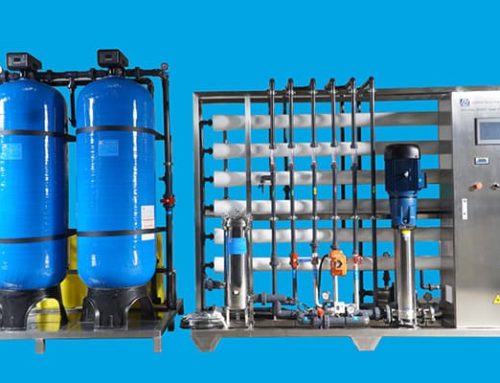
Industrial reverse osmosis manchines are the core of modern water treatment, and their performance directly affects the quality of production water and operating costs. This article will delve into the key factors that affect the lifespan of reverse osmosis filters and provide practical maintenance strategies to help you maximize your equipment investment return.
How long can an industrial reverse osmosis machine usually be used for?
Industrial reverse osmosis systems are core equipment for water treatment in enterprises, and their overall service life directly affects the quality of the effluent water and the stability of the equipment. Generally speaking, the lifespan of the main equipment of the entire system is roughly between 2 and 5 years, but the specific lifespan depends on the state and maintenance of each individual component.
The replacement cycle for pre-filters and sediment filters should be based on the usage and water quality of the system. Generally, pre-filters should be replaced every 3-6 months, while sediment filters should be replaced every 6-12 months. However, it is recommended to check the filters regularly and replace them as needed The first line of defense for the system is pre-filtration and sedimentation filters, which mainly intercept large particles of impurities and sediment. The recommended replacement cycle for these filters is usually 6 to 12 months, and they should be replaced or cleaned on a regular basis to ensure interception efficiency.

How often should activated carbon filter be replaced?
Activated carbon filter is used to remove odor, color and some organic matter, and its adsorption performance decreases over time. Usually, the effective period of activated carbon filter is also between 6 to 12 months. When the adsorption capacity declines, it should be replaced in time to maintain the treatment effect.
What are the differences in the lifespan of the core components of industrial reverse osmosis machines?
Industrial reverse osmosis systems are precision water treatment devices composed of multiple filtration units, with varying lifespans depending on the function of each component. The pretreatment units include quartz sand filters و activated carbon filters, which typically have a lifespan of 8-24 months and are primarily responsible for removing suspended solids, colloidal solutions, and organic matter.
The PP cotton filter in the core filtration unit, serving as a precision filtration component, has a relatively short lifespan, typically lasting between 10-30 days. It requires frequent replacement to ensure the safe operation of the subsequent RO membrane. Conversely, the most critical component in the system, the reverse osmosis membrane, has a design lifespan of 3-5 years under normal usage conditions. High-quality products may even last for over 5 years under ideal conditions.
It is worth noting that all membrane component manufacturers usually provide a three-year quality guarantee, but this does not equate to the normal service life of the membrane. The guarantee terms mainly ensure that the water production rate is not lower than 80% under the same pressure and the salt penetration rate is not higher than 1.5 times within three years.
The common service life of a reverse osmosis membrane element is typically between 2-4 years, depending on the quality of the water source, the temperature, and the usage The reverse osmosis membrane is one of the most critical components in the system, with a typical lifespan of 2 to 5 years. The lifespan of the membrane is greatly influenced by the quality of the inlet water, operating parameters, cleaning frequency, and maintenance measures. Regular chemical cleaning and monitoring can significantly extend the lifespan of the membrane components.
What factors affect the service life of reverse osmosis membranes?
The lifespan of a reverse osmosis membrane is influenced by various factors, with the quality of the inlet water being one of the most significant. Fluctuations in the quality of the raw water can increase the load on the pretreatment system, leading to an increase in impurities in the RO inlet water. Pollutants such as inorganic substances, organic compounds, microorganisms, particulates, and colloids can accelerate membrane fouling.
Chemical stability is also a key factor in determining the lifespan of membranes. Improper control of residual chlorine can directly oxidize membrane materials, causing irreversible damage. The failure to correctly add scale inhibitors or neglecting microbial prevention can easily lead to microbial contamination and scaling issues. Improper shutdown procedures during operation and management can also contaminate membrane components. When rapid depressurization is not fully cleaned, the inorganic salt concentration on the concentrate side of the membrane is higher than that of the raw water, which can easily lead to scaling and contamination.
Environmental factors such as water temperature are equally important. When the ambient water temperature is higher than 45°C, the service life of the membrane will be significantly shortened. Generally, the water temperature should be controlled below 40°C, and cooling measures should be taken when necessary. In addition, the presence of strong oxidizing substances or easily precipitated substances in the wastewater can also lead to a shortened membrane service life.
How does the lifespan of industrial reverse osmosis machine affect the production process?
The lifespan and maintenance of equipment are directly linked to production stability and efficiency. Filters with deteriorating performance can lead to substandard water quality, frequent equipment downtime, and reduced production line efficiency. By conducting scheduled maintenance and replacing aging components, water quality can be maintained, reducing the risk of downtime and improving product consistency.
There are several effective ways to extend the lifespan of a reverse osmosis filter, including:
- Regular maintenance: Regular cleaning and maintenance of the filter can help prevent clogging and prolong its lifespan.
- Proper installation: Proper installation of the filter is essential to ensure optimal performance and longevity.
- Use of high-quality water: Using high-quality water can help prevent scaling and clogging of the filter, which can extend its lifespan.
- Avoiding impurities: Avoiding impurities in the water supply, such as sediment or chemicals, can help prevent clogging and prolong the lifespan of the filter.
- Replacement of worn parts: Regular inspection and replacement of worn parts, such as the membrane or O-rings, can help extend the lifespan of the filter To extend the service life, several measures should be taken: regular maintenance and cleaning of the pre-filter element, activated carbon, and membrane components; optimization of operating conditions (control of inlet water quality, temperature, pressure, and flow); timely replacement of aging filter elements and water quality monitoring. These practices can reduce the damage caused by wear and pollution to the equipment.
What are the maintenance costs included?
Maintenance costs include regular replacement of filter elements and membrane components, system cleaning, testing, and manual maintenance; operating costs involve energy consumption and personnel management. By formulating a reasonable maintenance plan, improving operational efficiency, and optimizing energy consumption, overall costs can be reduced while ensuring water quality.
When should you replace a component to avoid greater losses?
When the resistance of the pre-filter increases significantly, the adsorption capacity of activated carbon decreases significantly, or the water production rate and desalination rate of the reverse osmosis membrane continue to deteriorate, the corresponding components should be replaced as soon as possible. Delaying replacement can lead to increased system load, higher energy consumption, and higher maintenance costs.
How can we effectively extend the lifespan of the system through routine maintenance?
Pre-treatment system maintenance is the first line of defense for extending the life of reverse osmosis membranes. The quartz sand filter should adjust the backwash cycle according to the inlet water turbidity. When the turbidity is ≤5NTU, it is recommended to backwash once every 1-3 days, and the quartz sand should be completely replaced after 1 year of use. The activated carbon filter needs to detect the residual chlorine in the effluent water every shift to ensure that it is <0.1ppm, backwash once every 7 days, and replace the activated carbon every 6 months.
Professional maintenance of membrane components includes daily low-pressure flushing and regular chemical cleaning. After each shift of water production, the water from the security filter should be used to flush the membrane at 2-3 times the membrane flux for 20 minutes. When the water production decreases by 10%-15%, the desalination rate decreases by 3%-5%, or the pressure difference increases by 15%, chemical cleaning is required. The cleaning method needs to be selected according to the type of pollution: inorganic scaling uses 2% citric acid solution; organic pollution uses 0.2% NaOH + 0.025% sodium dodecylbenzenesulfonate solution; metal oxides use EDTA tetrasodium salt complex cleaning.
Operational parameter monitoring is the foundation of predictive maintenance. Each shift should record the inlet pressure (1.0-1.5 MPa), inter-segment pressure difference (<0.2 MPa), monitor the pure water flow rate (deviation from design value <5%), and the conductivity of the produced water (<10 μS/cm). By comparing current parameters with initial values using standardized software, the cleaning procedure can be initiated when the water production decreases by 15% or the desalination rate decreases by 5%.
How can the operating costs of a reverse osmosis system be optimized and controlled?
To optimize the operating costs of a reverse osmosis system, it is necessary to start with energy consumption management. Choosing ultra-low pressure reverse osmosis membranes is one effective strategy, as their operating pressure is around 0.8 MPa, which can save more than 30% of electricity consumption compared to conventional reverse osmosis membranes (1.3-1.5 MPa). Equipping high-pressure pumps with frequency converters can not only mitigate water hammer impact, but also reduce valve throttling energy consumption by setting reasonable operating pressures, resulting in seasonal energy savings of at least 15% throughout the year.
Chemical dosing optimization can also significantly reduce costs. By analyzing water quality data to optimize the dosage of scale inhibitors, it is often possible to save 20% or more in chemical costs. Consideration of the use of anti-pollution reverse osmosis membranes is also a wise choice. These membrane components are specifically designed for complex water quality and have high anti-pollution characteristics, which can reduce energy consumption by 30%-40% under the same water quality conditions.
Maintenance cycle and cost optimization strategy of each component of industrial reverse osmosis machine:
| Component Name | Regular Replacement Cycle | Maintenance Points | Cost Optimization Strategy |
|---|---|---|---|
| PP cotton filter | 10-30 days/3-6 months | Replace when pressure difference exceeds 0.05 MPa | Choose the appropriate model to avoid over-configuration |
| Activated carbon filter | 6-24 months | Monitor residual chlorine <0.1ppm | Regular backwash to extend life |
| Quartz sand filter | 1-2 years | Regular backwash to avoid compaction | Adjust the backwash frequency according to turbidity |
| Reverse osmosis membrane | 3-5 years | Regular chemical cleaning, shutdown protection | Ultra-low pressure membrane energy saving, variable frequency control |
How can we compare the lifespan and performance of reverse osmosis membranes from different brands?
The mainstream reverse osmosis membrane brands in the market vary in terms of lifespan and performance. Dow’s reverse osmosis membrane is widely recognized as a brand with a longer service life, but its lifespan is still affected by operating conditions and water quality factors. All reverse osmosis membrane manufacturers use interfacial polymerization preparation technology, with membrane sheets consisting of three layers: base layer (non-woven fabric), support layer (polysulfone), and separation layer desalination layer (polyamide). During the preparation process, these layers can be optimized separately to improve performance.
The choice of membrane material has a significant impact on its lifespan. Currently, cellulose acetate and aromatic polyamide materials are mainly used, and the component forms include hollow fiber, roll, plate and frame, and tube. The anti-pollution membrane is a special model developed for Chinese water quality, featuring high desalination rate, high water yield, high chemical durability, high anti-pollution ability, and ultra-low pressure operation.
The performance evaluation criteria should include desalination rate, water production rate, and operating pressure. High-quality reverse osmosis membranes should maintain a stable desalination rate (above 98%) and design water production rate over long-term operation. As the membrane elements age, the salt passage rate will gradually increase, which is a normal aging phenomenon.
How to establish a maintenance plan for a reverse osmosis machine?
A scientific maintenance plan should include three levels: daily inspection, regular maintenance, and emergency response. Daily inspection requires daily inspection of equipment appearance, leakage at pipeline connections, and regular recording of readings from pressure gauges, flow meters, conductivity meters, etc. Regular maintenance includes weekly backwashing of multi-media filters and activated carbon filters, monthly chemical cleaning of reverse osmosis membranes, and semi-annual replacement of cartridge filters.
The strategy of seasonal maintenance cannot be ignored. Anti-freezing measures should be taken in winter, and outdoor pipelines should be equipped with heat tracing bands. When the machine is stopped, the water inside the membrane components should be drained. During short-term shutdown (≤15 days), low-pressure flushing should be performed every 2 days; during long-term shutdown (>15 days), 0.5%-1% sodium bisulfite solution should be injected for protection, and the solution should be checked and replenished monthly.
Personnel training is the guarantee for effective implementation of maintenance plan. Operators need to pass theoretical examination and practical assessment to be familiar with equipment start-stop process and emergency treatment. Regularly organizing emergency drills such as chemical leakage and electrical failure can significantly improve the reliability of system operation.
Conclusion:
The actual lifespan of industrial reverse osmosis systems and their various filter cartridges depends on the quality of the inlet water, operational parameters, and maintenance strategies. By establishing standardized maintenance plans, optimizing operating conditions, and promptly replacing aging components, it is possible to extend the lifespan of the equipment, reduce long-term operating costs, and ensure the stability and safety of production water.
Get The Solution Today!
 Arabic
  English
  Spanish
  Russian
  Danish
  German
  Indonesian
  Romanian
  Vietnamese
  Turkish
  Thai
Thai  Italian