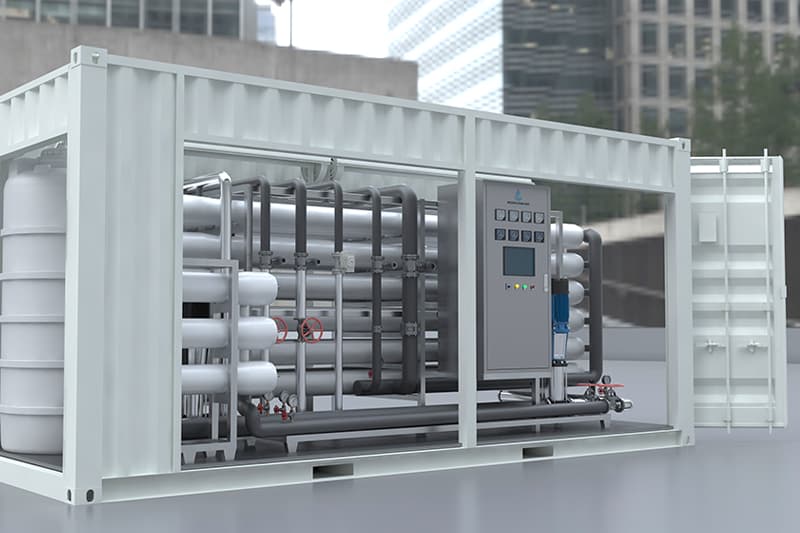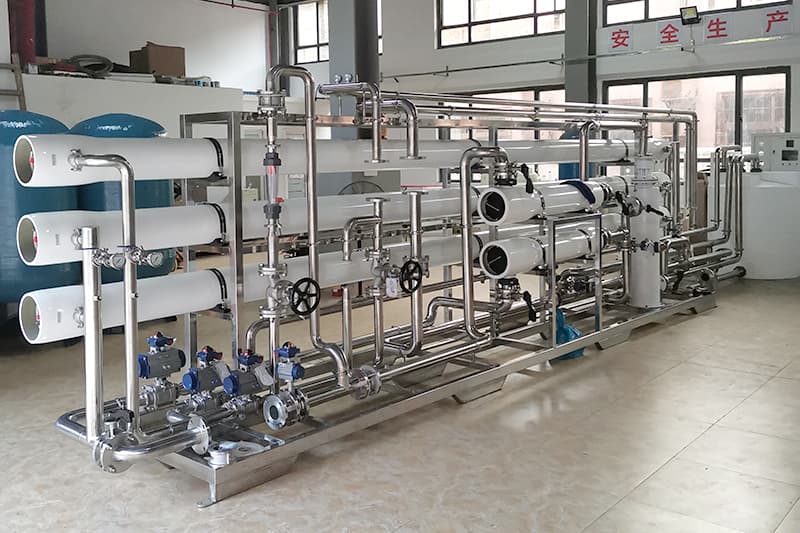

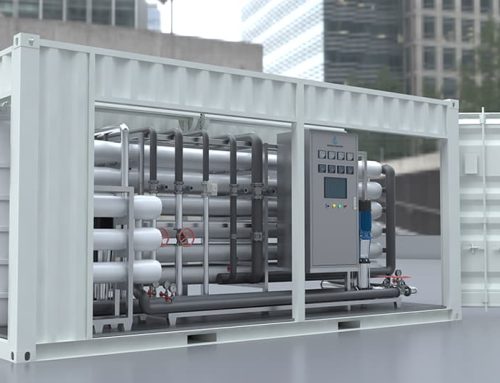
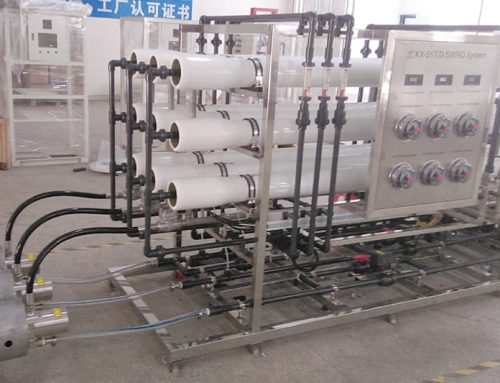
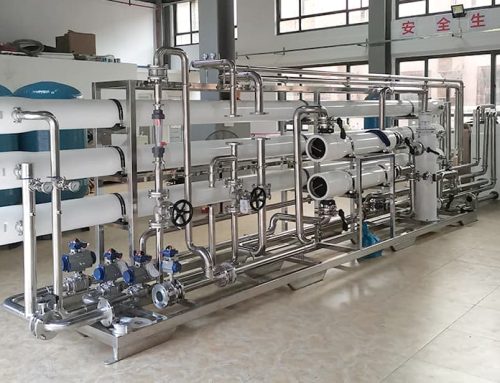
Containerized water treatment systems integrate complete water treatment processes within standard shipping containers, enabling rapid deployment, flexible mobility, and plug-and-play functionality. They deliver clean, safe water solutions for diverse global applications. These systems typically employ advanced technologies such as reverse osmosis (RO), ultrafiltration (UF), nanofiltration (NF), and biological treatment to effectively process diverse water sources ranging from domestic wastewater to seawater.
Why Are The Advantages For Containerized Water Treatment Systems?
Traditional water treatment facilities often require extensive land and complex infrastructure. Containerized systems overcome these limitations through space-efficient design, compressing modules like pretreatment, filtration, and disinfection into 20-40 foot standard containers.
Key advantages include:
- Flexible Site Selection: Direct deployment at factories, construction sites, or temporary camps without additional civil engineering
- Rapid Scalability: Linear processing capacity expansion achieved by connecting multiple containers in parallel
- Terrain Adaptability: Stable operation in complex environments like mountains or islands, overcoming geographical constraints
- High Mobility: Container design facilitates easy transportation and relocation, ideal for temporary or mobile applications
How Does the System Achieve High Integration and Rapid Deployment?
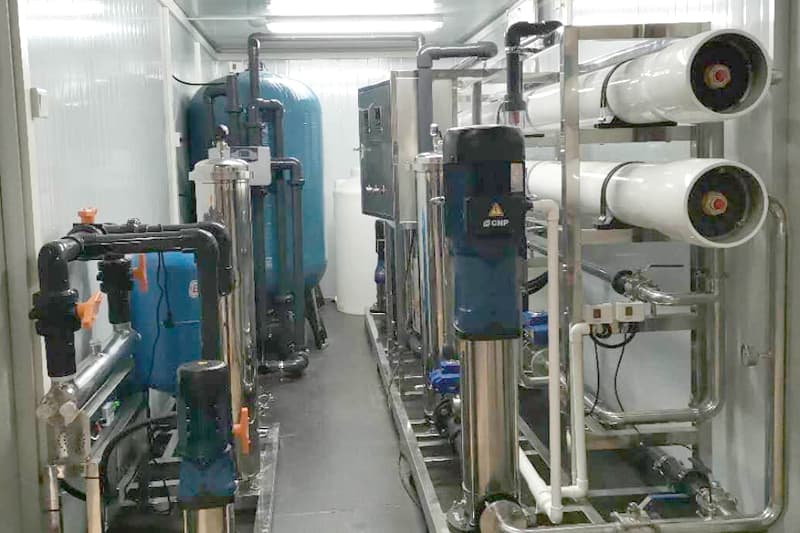
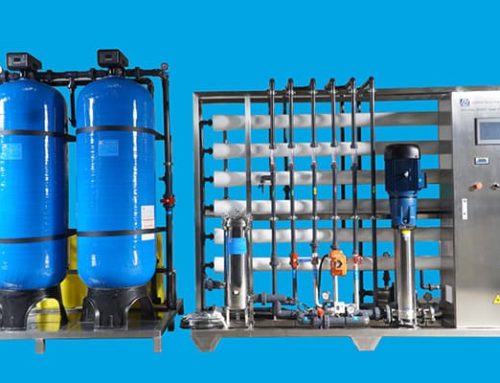
Die containerized RO water treatment system features a compact internal layout integrating inflow regulation, aeration, sedimentation, sludge return, effluent disinfection, and control systems. All components undergo anti-vibration, anti-corrosion, and thermal insulation treatments to withstand demanding transportation and outdoor operating conditions.
| System Component | Function | Technical Advantage |
|---|---|---|
| Pre-treatment Unit | Removes large particulate matter and sediments via screens and grit chambers | Prevents clogging in subsequent treatment stages, enhancing efficiency |
| Biological Treatment Unit | Utilizes biological technologies like activated sludge or biofilm processes | Degrades organic matter through microbial metabolism, reducing pollutant concentrations |
| Membrane Treatment Unit | Employs reverse osmosis (RO), ultrafiltration (UF), or nanofiltration (NF) technologies | Removes bacteria, viruses, and dissolved salts to enhance water purity |
| Disinfection Unit | Employing chlorination, UV disinfection, and other methods | Eliminates bacteria and viruses in wastewater to ensure effluent safety |
| Intelligent Control System | Integrates automated control technology for real-time parameter monitoring | Ensures stable system operation with remote monitoring and adjustment capabilities |
How does the system adapt to diverse raw water sources and harsh environments?
Die materials and construction of containerized water treatment equipment ensure long-term operational capability. The main structure typically employs 304 stainless steel and polyethylene (PE) composite materials, combining corrosion resistance with structural strength.
These systems can handle:
- Highly acidic water: A mining site’s water purification equipment operated continuously for 3 years in an acidic environment with a pH range of 3-11, showing no rust or leaks in the container
- Extreme cold environments: Maintains stable operation at -30°C, suitable for high-altitude cold regions
- Oil-contaminated and radioactive water: Military-grade versions treat complex sources including oil-contaminated and radioactive water
- High-salinity seawater: Desalinates seawater via reverse osmosis technology to produce potable water
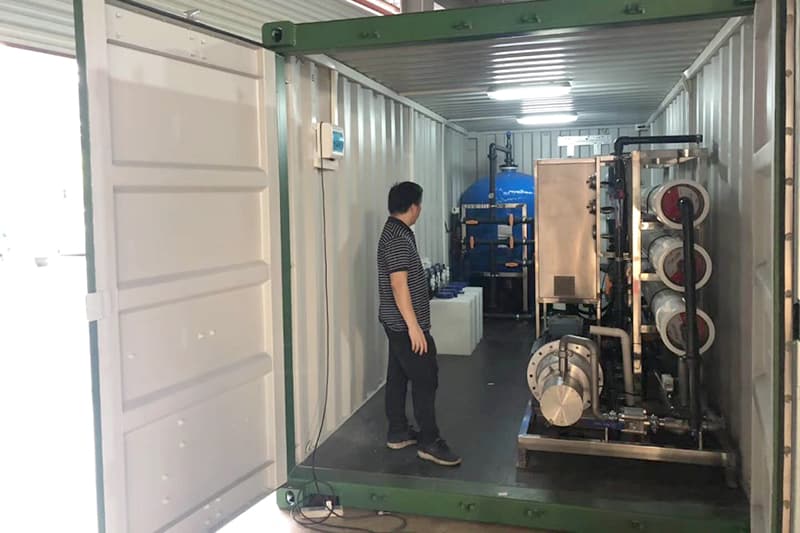
How is the feature for containzed water treatment systems?
Containerized water treatment units monitor multiple water quality parameters—including turbidity and TDS levels—in real time while automatically adjusting chemical dosing.
Features include:
- Early warning system: Immediately pushes data on filter cartridge lifespan, pressure anomalies, etc., to management terminals
- Energy-saving mode: Automatically adjusts pump power based on peak/off-peak water usage, achieving 25% electricity savings
- Data Traceability: Generates daily water quality reports to meet environmental management system certification requirements
- Remote Monitoring: Enables cloud-based remote fault diagnosis, reducing operational costs by 40% for a rural drinking water project
Which Scenarios Best Suit Containerized Water Treatment System?
Containerized water treatment systems have extensive applications, primarily including:
- Emergency Relief: Rapid deployment to provide safe drinking water during natural disasters or crises, e.g., supplying 5,000 people within 48 hours (as demonstrated in typhoon relief efforts in the Philippines)
- Industrial Recirculating Water Systems: Used in industrial facilities like electroplating plants, achieving up to 90% wastewater reuse and saving over one million yuan annually in water costs
- Rural Drinking Water Safety: Addresses endemic diseases caused by high fluoride or arsenic levels, with treated water meeting the GB 5749-2022 drinking water standard.
- Remote Area Development: Solar-powered versions achieve zero carbon emissions, supporting eco-tourism zone construction.
- Temporary Project Needs: Rapidly deployed at temporary sites like construction sites to treat wastewater generated during operations.
How to Choose Containerized Water Treatment System Configurations?
Selecting an appropriate containerized water treatment system requires comprehensive consideration of multiple factors:
Water Quality and Volume: Choose suitable equipment models and specifications based on the quality and volume of wastewater to be treated
Process Requirements: Understand the treatment processes and technical characteristics of the equipment to ensure it meets processing needs
Equipment Quality and Reliability: Select manufacturers and brands known for dependable quality and stable performance
After-Sales Support: Evaluate the manufacturer’s service network and technical assistance capabilities
Future advancements in containerized water treatment plants will focus on deepening intelligent operation, resource recovery, and low-carbon solutions. Treatment processes will further optimize microbial communities and reactor designs to enhance denitrification, phosphorus removal efficiency, and shock load resistance. Integration of membrane technology with advanced oxidation processes will enhance removal of refractory organic compounds and trace pollutants, meeting stricter discharge standards or reuse requirements.
Containerized water treatment systems are evolving from emergency and temporary solutions into sustainable, intelligent, multi-functional distributed water treatment units, providing robust support for building flexibility and resilience in global water resource management.
Erhalten Sie noch heute eine Lösung!
 German
  English
  Arabic
  Spanish
  Russian
  Danish
  Indonesian
  Romanian
  Vietnamese
  Turkish
  Thai
Thai  Italian