
Obtaining stable drinking water is one of the important challenges faced by many regions around the world today. According to a report released by the World Health Organization (WHO) and the United Nations Children’s Fund in 2025, a quarter of the world’s population still lack access to stable and regulated drinking water, and this problem will further intensify as the decline continues to grow.
What is brackish water?
Brackish water is a type of additional water body with a salinity higher than freshwater but lower than seawater; The salinity here specifically refers to the concentration of dissolved salts in water, and its key characteristic is that the salinity is between freshwater and seawater.
For example, according to the standards of the US Environmental Protection Agency (EPA), the TDS content of drinking water should be below 500ppm, while the TDS content of brackish water ranges from 3000 to 10000ppm! The most intuitive way to understand brackish water is to imagine the intersection of rivers and oceans – the water bodies formed during the transition from freshwater to seawater are examples of brackish water. These areas are called estuaries and are habitats for salt tolerant organisms such as mangroves and oysters!
| Water type | Salt concentration range (ppm) | Features |
|---|---|---|
| Freshwater | <1000 | can be drinking after boiled |
| Brackish water | 1000-15000 | needs to be treated before drinking |
| Seawater | 30000-40000 | Strong salty and bitter taste, requiring special treatment |
| drinking water | <500 | can be drinking directly |

Where the brakish water is found?
The spreading range of brackish water is very wide, and its traces can be found in estuaries, streams, and underground aquifers in natural environments. It can also survive in water bodies created by artificial facilities; Estuaries are the most natural source of brackish water, and the mouths of major rivers around the world have spread, such as the confluence of the River Thames and the North Sea in London, the confluence of the Hudson River and the New York Bay in New York, and the confluence of the Amazon River and the Atlantic Ocean in Brazil, all of which have formed typical estuarine brackish water areas.
Due to geological and historical reasons, some lakes also contain brackish water, and the Caspian Sea, the largest lake in the world, is a typical representative. Its formation is related to the ancient marine relics between the Eurasian continent. Similar brackish water lakes are widely distributed worldwide, with five visible brackish water lakes in India alone;
Artificial activities can also create sources of brackish water, such as swamps artificially submerged for shrimp reproduction, and ponds and streams formed by building dams to regulate river and sea currents; Deep fossil aquifers also contain brackish water. The reason why these underground waters are in a slightly salty state can be attributed to ancient marine residues, saltwater intrusion in coastal areas, or excessive absorption of minerals such as sodium and chloride during water infiltration;
What techniques can be used to treat brackish water?
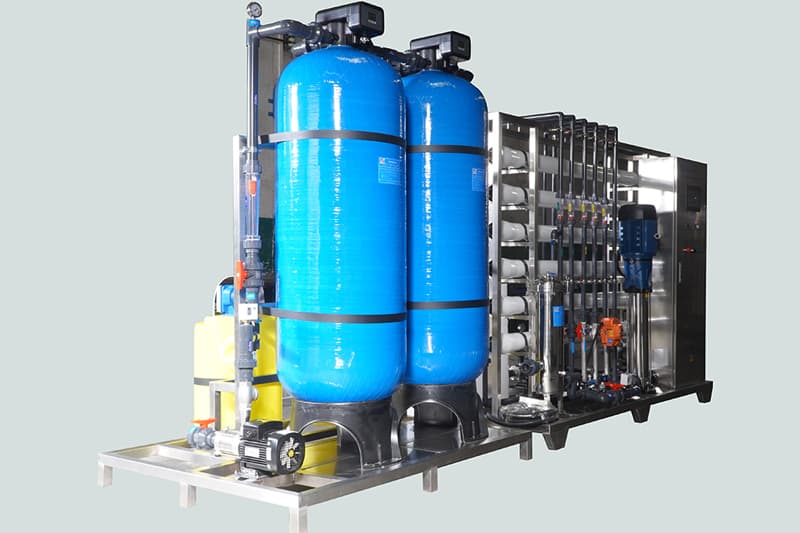
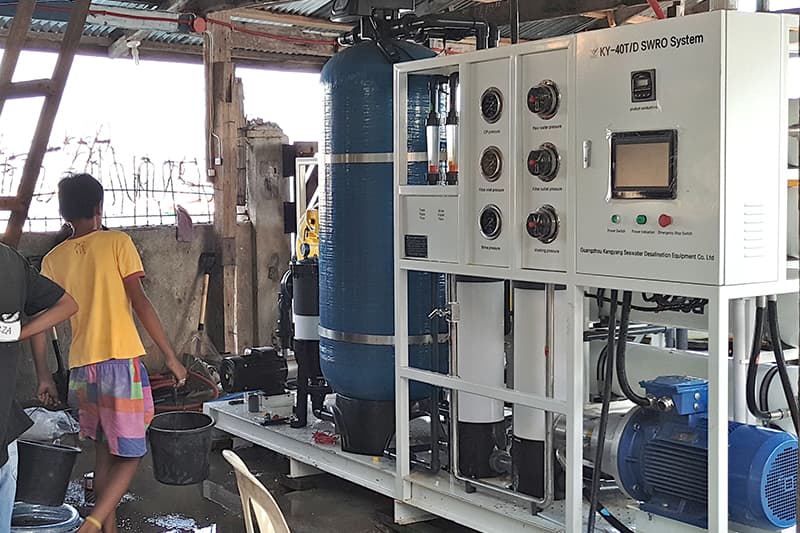
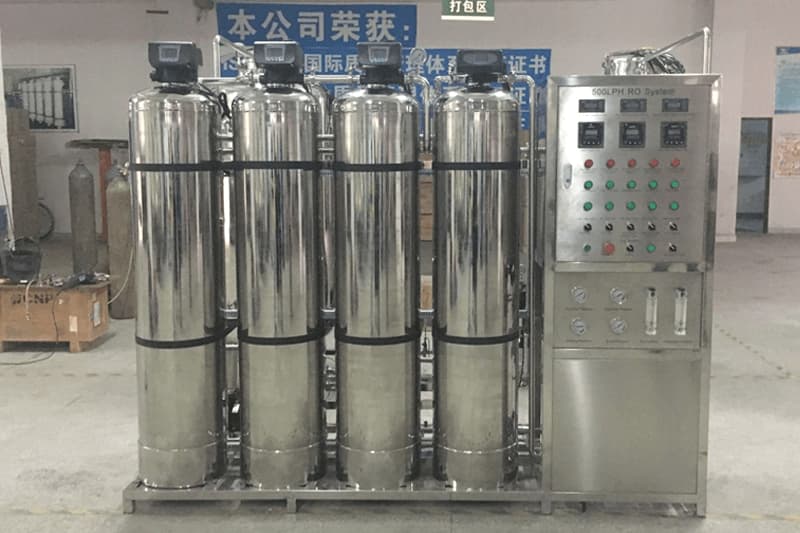
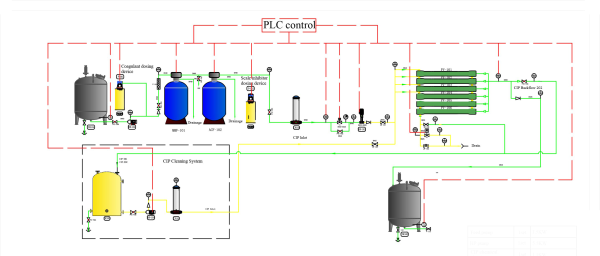
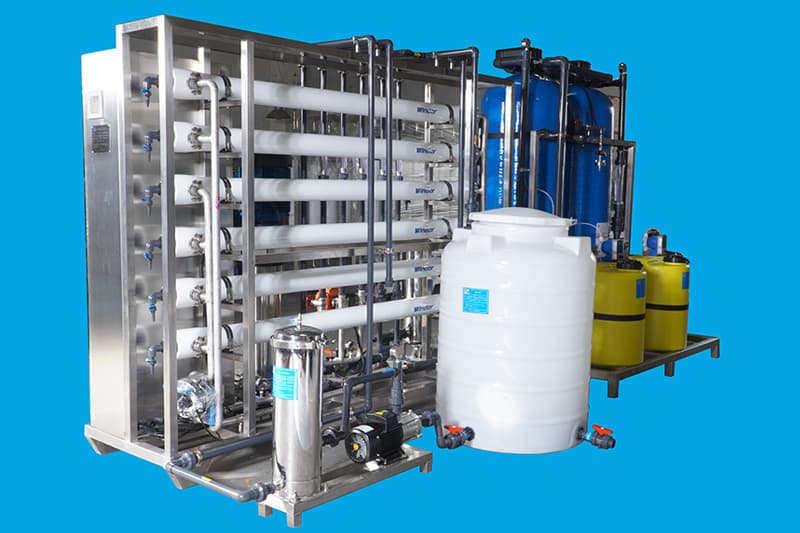
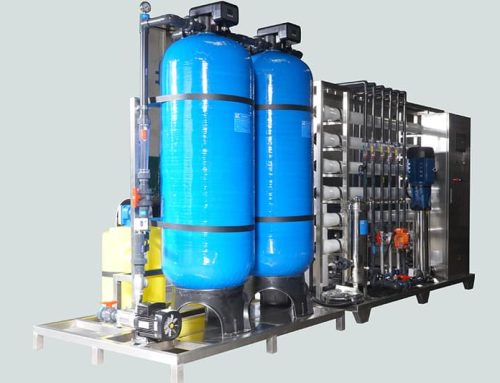
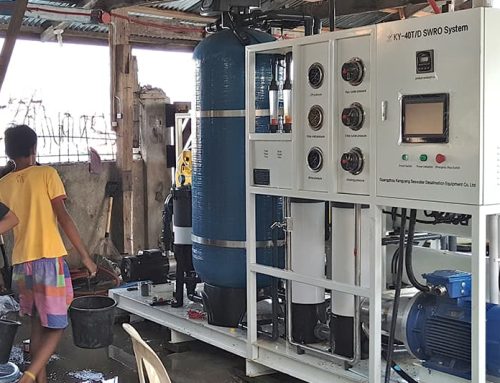
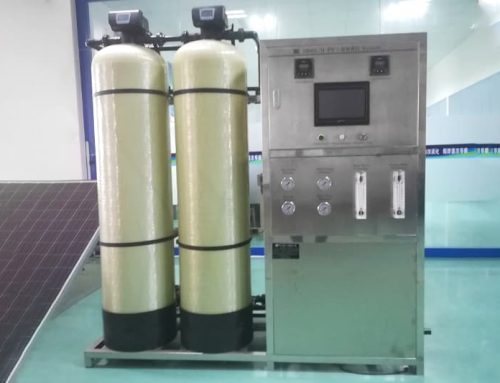
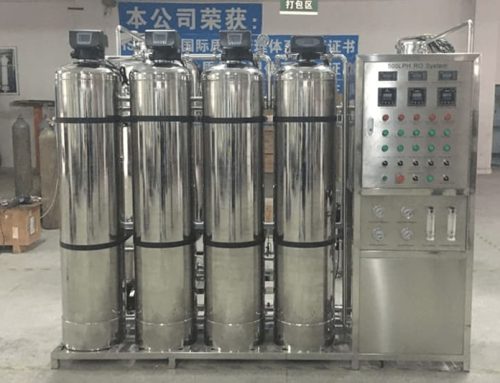
The treatment of brackish water requires the use of a water treatment system with complete desalination capabilities. The core of desalination capability is to remove dissolved mineral salts from the water and transfer them to freshwater that can be deceived! The mainstream desalination technologies applied to the management of brackish water are reverse osmosis and distillation. Although these two techniques can also be used for desalination of seawater, due to the higher salinity of seawater, the treatment is much lower than that of brackish water;
1. Reverse osmosis technology
Reverse osmosis is currently the most common desalination technology for brackish water worldwide. This technique applies specific pressure to brackish water, forcing it to penetrate through a semi permeable membrane. The tiny pores on the membrane block the melting of salt and other pollutants, allowing only water molecules to pass through, thus achieving the conversion of brackish water to freshwater;
2. Distillation technology
The distillation process simulates the evaporation and condensation process in nature. By heating, brackish water evaporates to form steam. As salt and minerals cannot evaporate with water vapor, the condensed steam can be transferred to freshwater; There are two main distillation techniques suitable for desalination of brackish water: multi-stage flash evaporation and solar distillation. The former is suitable for large-scale industrial processing, while the latter is more suitable for small-scale operations and small communities.
In multi-stage flash evaporation, brackish water flows through multiple chambers, is heated and compressed under high pressure, and then enters the subsequent chambers where the pressure gradually decreases. When the pressure drops sharply, the water quickly boils to produce steam, which can be collected as fresh water after condensation! Saudi Arabia has one of the largest multi-stage flash evaporation systems in the world, with a daily freshwater production of approximately 200 million gallons.
What are the advantages of different technologies for treating brackish water?
The two mainstream leadership skills have different principles, unique advantages, and are suitable for different application scenarios; The core advantage of reverse osmosis lies in its high efficiency, relatively low energy consumption, and high degree of modularity. It can be used to build large-scale factories or configure small household equipment, especially suitable for urban water supply and industrial water use scenarios that require high processing speed and water quality stability;
The advantages of distillation technology are reflected in its simple operation, low maintenance cost, stronger adaptability to raw water quality, and the ability to effectively desalinate brackish water through evaporation and condensation, even if it contains many impurities; Among them, solar distillation relies entirely on pure energy and does not require the consumption of electricity or fossil fuels. It is very suitable for remote areas, islands, and small communities with power supply losses, and plays a significant role in environmental protection and sustainability.
What are the applications for brackish water?
Brackish water have divergent application values in their natural state and after being controlled; Brackish water in its natural state, due to its low cost and convenient access, is often used as a cooling medium in the thermal power industry, oil and gas industry, and mining industry.
The most important use of desalinated brackish water is as drinking water for humans and livestock, which is also the key to solving the water supply problem in arid and water scarce areas. With the worsening global shortage of freshwater, especially in arid developing regions, the management of brackish water has become an important way to alleviate water demand!
Can we drink brackish water directly?
Brackish water cannot drink directly, as its high concentration of salt is the main reason. After drinking brackish, the kidneys need to overload to produce more urine and relieve excess salt. This process can cause rapid loss of water in the body, ultimately leading to dehydration symptoms. Long term consumption may also cause permanent damage to organs such as the kidneys.
But after desalination, the brackish water can meet the stable drinking standards! Both reverse osmosis and distillation technologies can effectively remove salt and pollutants from water, and the treated water quality can meet the drinking water hygiene standards of the World Health Organization and various countries, such as China’s “Sanitary Standards for Drinking Water” (GB 5749-2022) or the US EPA standards, making it a safe and reliable source of drinking water!
Conclusión
The desalination of brackish water is an important way to address the global water crisis by transferring high salt water resources to usable water through techniques such as reverse osmosis and distillation! In the future, with the improvement of anti pollution properties of membrane materials and the coupling of renewable energy, the cost of treating brackish water will be further reduced, providing sustainable solutions for water scarce areas.
If you have further questions about the treatment technology, resource distribution, or other water resource related issues of brackish water, please feel free to discuss and exchange ideas at any time.
Get The Solution Today!
 Spanish
  English
  Arabic
  Russian
  Danish
  German
  Indonesian
  Romanian
  Vietnamese
  Turkish
  Thai
Thai  Italian