
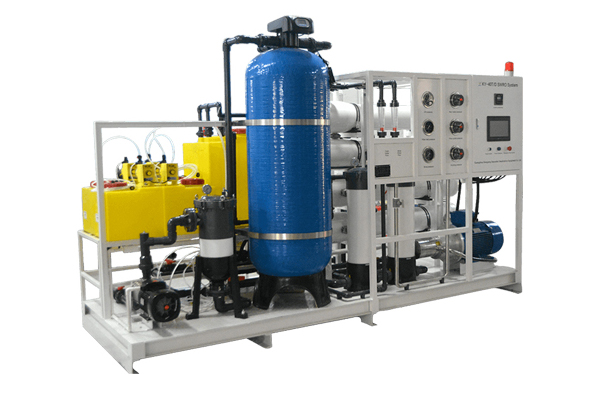
Industrial Desalination Plant Seawater Reverse Osmosis System
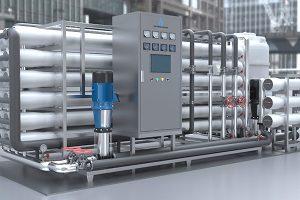
KYsearo’s industrial reverse osmosis seawater desalination system has a daily production capacity of 15-3000 m3/day. It uses reverse osmosis technology, whereby seawater is pressurised to 5-8 MPa by a high-pressure pump and then desalinated through a polyamide composite membrane. The produced water complies with the GB5749-2022 standard for drinking water.
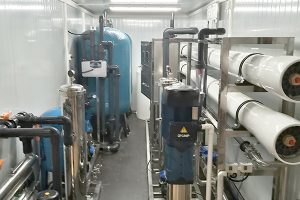
- Adopting a skid-mounted or containerised structure, the system integrates pre-treatment, reverse osmosis, and energy recovery units, enabling rapid deployment with a small footprint;
- Supports one-button start/stop, online water quality monitoring (TDS, conductivity), and automatic flushing, with protective mechanisms triggered in case of abnormalities;
- Power supply compatible with 220V-440V, suitable for scenarios such as ships, islands, and coastal factories.
- Typical applications include island water supply , ship freshwater replenishment, and industrial circulating water preparation.
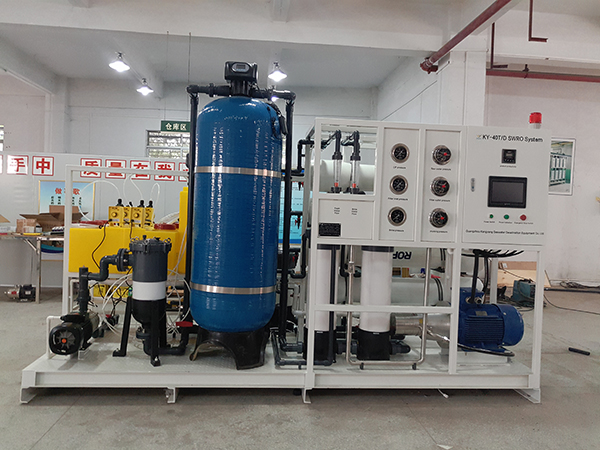
Industrial Desalination Plant Seawater Reverse Osmosis System Components
- Ansaugpumpe mit Tauchmotor
- Speisewasserpumpe
- Sandfilter
- 5 μm Patronenfilter
- 1 μm Patronenfilter
- Flockungsmitteldosiersystem
- Bakterizid-Dosiersystem
- Reduktionsmittel-Dosiersystem
- Anti-Skaliermittel-Dosiersystem
- Hochdruckpumpe
- Membranelemente
- Druckbehälter
- UV-Sterilisator
- Frischwassertank, V=2000L, PE/PP, vom Kunden angeboten
- Elektrische Schalttafel und Verkabelung
- Rohrleitungen, Armaturen und Ventile
- SS-Rahmen oder CS-Beschichtungsrahmen
- 40KW Sonnenenergie
Leading Industrial Desalination Plant Seawater Reverse Osmosis System Manufacturer
KYsearo focuse on customisation, providing comprehensive solutions tailored to customer needs, from design and equipment selection to installation and commissioning. Our company develops specialised solutions for applications such as ships, islands, and industrial settings. It employs modular container-based integrated design with corrosion-resistant components to ensure stable operation in high-salt fog and high-humidity environments. We had developed high-efficiency reverse osmosis membrane modules with a desalination rate of ≥99.5% and a 30% reduction in energy consumption. And we had passed classification society inspections and obtained CE certification, exporting our desalination systems to countries such as Malaysia and the Philippines etc.
We provide multilingual operational support and a 72-hour emergency response service. From site surveys to post-installation maintenance support, Our factory ensure the long-term reliable operation of our reverse osmosis systems. Our customised model is widely applied in seawater desalination, with typical cases achieving a 70% reduction in freshwater production costs and a 40% improvement in operational efficiency, establishing it as a benchmark service provider for both industrial and residential applications.

Jetzt eine Lösung finden
What are the application for industrial desalination plant?
The range is including scale, application (household, industrial, farming), and needed water quality/quantity. Constraints like budget plan, area, and energy substantially affect modern technology and layout. Range varies commonly: huge utility systems need considerable power (tens of MW) and generate millions of gallons daily; little, separated systems require less (tens-hundreds kW) and return hundreds-thousands gallons daily. Agricultural plants are little (<500 m³/day), medium (500-5,000 m³/day), or large (>5,000 m SIX/ day).
How to choose desalination technology?
Innovation option is driven by source water, outcome specifications, and restrictions. Dominant modern technologies are purification (MSF) and membrane (RO, EDR). RO make up ~ 69% of worldwide capability. RO/EDR are commonly for briny water (<10 g/litre); RO/distillation for seawater (>30 g/litre). Thermal procedures (MSF, MED) use home heating, typically with power plant, eating fairly big energy.
RO usually eats less power than thermal, specifically at smaller sized scales (2.5-3.5 kWh/m two vs. ~ 13 kWh). Energy costs can be as much as 30% of total expense. CAPEX varies: thermal plants are ~ 1.53 times much more capital-intensive than RO. MSF CAPEX is ~ USD 2M/MLD, MEDICATION USD 1.5 M, RO USD 1.3 M. OPEX differs: thermal has greater variable prices (power, chemicals), RO higher fixed (labor, upkeep). RO is more vulnerable to fouling/scaling; thermal is much better for very brackish water. Both create concentrated salt water. Arising nanomembranes provide possible options. RO flaunts reduced particular energy intake (< 3.1 kWh/m TWO). Historically, thermal controlled, yet RO is currently leading as a result of flexibility. Thermal can make use of waste warm. RO typically produces much less salt water and lower GHG exhausts. ED makes use of an electric gradient, usually for brackish water (< 3000 mg/L).
How is industrial desalination plant engineering design?
The industrial desalination plant design converts innovation right into an in-depth strategy, developing pre-treatment, core system, post-treatment, pumping, and piping. Effective style takes into consideration water resource, ecological effect, and interconnected phases. Sustainability is critical, reviewing brine discharge, chemical usage, and emissions. Energy efficiency is a major factor to consider, using pressure exchangers and turbochargers. Pre-treatment design is heavily affected by water source characteristics. Main phases include intake, pretreatment, core desalination (typically RO), post-treatment, and concentrate discharge. Current SWRO plants are standard yet vary based on feed/product top quality and recuperation prices.
Pre-Treatment Layout: Reliable pre-treatment gets rid of contaminations to protect devices from fouling and prolong lifespan. It eliminates suspended solids, raw material, and so on. Technologies include physical purification, chemical flocculation, sedimentation, biocides, or UV disinfection. A typical process consists of consumption, optional DAF, DMF/MF/UF, and cartridge filters. Integrating membrane pre-treatment with traditional coagulation is common; inline coagulation reduces footprint. Coagulants include ferric chloride, light weight aluminum sulfate, polyaluminum chloride. Style criteria are essential for optimum DAF. Natural polymers, purification media, and ceramic modern technologies protect equipment before cartridge filters and antiscalant.
Post-Treatment Design: Desalinated water generally requires additional treatment to fulfill standards, consisting of pH modification, trace toxin removal, and mineral enhancement. A post-treatment system includes pH modification, activated carbon filters, and UV disinfectors for quality, taste, and security. Permeates are often somewhat acidic, reduced in buffering/soft, needing adjustment for stability, buffering, and mineral web content. Mixing brackish groundwater or utilizing CO2/lime/calcite beds can remineralize water and adjust pH/alkalinity to prevent corrosion/scaling. Mixing desalinated water with seawater/brackish for watering can have negative effects (boron, chloride, sodium). Post-treatment differs by source; SWRO usually involves recarbonation, lime, calcite bed filtration, pH/alkalinity adjustment, rust inhibitors, and sanitation. BWRO involves pH/alkalinity adjustment, deterioration inhibitors, and disinfection. Bypassing raw/pretreated water and mixing with penetrate can reduce membrane capability, improve security, and decrease expenses. Locations for additional investigation include red water/pipe deterioration, blending complexities, CaCO3 precipitation indices, post-treatment method distinctions, and undocumented distribution system actions.
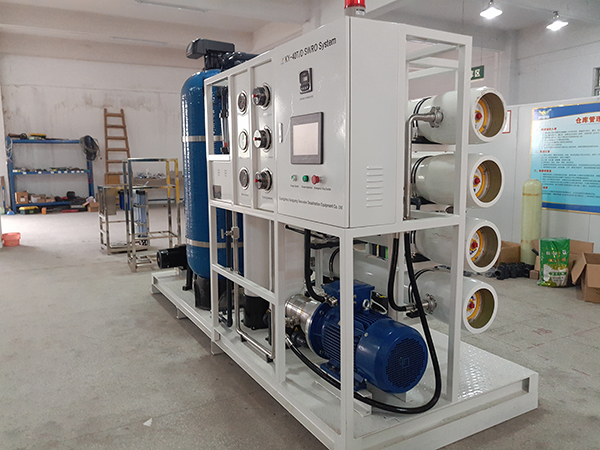
How is industrial desalination plant Construction?
Purchase and building and construction call for mindful planning. Devices is chosen based upon procedures and impurities, dealing with vetted providers for resilience, durability, and cost-effectiveness. Procurement thinks about part connections and integration. Tools dimension is selected during design; re-evaluation is required if unavailable dimensions impact computations. Procurement intends to reduce prices while satisfying specs. The procedure follows “source to contract” and “purchase to pay” principles: value for money, lasting competitors, honest habits, reliable resource use, risk reduction, and environmental/WHS. Membrane system execution includes usefulness, layout, bidding, building, testing/commissioning, startup, and closeout. Identifying process requires very early (20% -30% style) is essential.
Tenders ought to information equipment, beginning, amount, and costs. Priced estimate rates need to be repaired. Equipment distribution should meet the schedule. Significant suppliers include Veolia. Supply chain dangers like modern enslavement must be resolved. Large SWRO plants commonly use DBB, BOO, and BOT distribution methods, with personal funding common. Detailed water quality investigations and pilot researches verify membrane applicability and established style parameters, potentially taking months to over a year. Specialized consultants are essential for theoretical style. Material considerations are substantial for parts subjected to harsh saline water, commonly requiring incredibly duplex stainless-steel. All procedures are subject to deterioration without suitable materials and proper operation.
Appointing and Efficiency Testing
Commissioning and performance screening make certain proper operation and meeting requirements before handover. Appointing has pre-commissioning (static/functional tests, validating operation with water, interlocks, logic) and appointing phases (very first fill, sanitation, RO train pumping). Lots appointing tests involve tasting, analysis, screening, surveillance, and record-keeping, operating systems manually and instantly. Procedures are needed for flushing/commissioning numerous systems (consumption, filtering, UF, application).
Comprehensive sequences remain in O&M Manuals. Efficiency examinations determine ensured levels, with penalties for non-compliance. They occur after pre-commissioning/commissioning. Integrated plant confirmation guarantees power/water integrity. Examinations need to compete a specified duration (e.g., two hours) with minimum readings (e.g., every 60 seconds), following standards like DIN 1942. Instrumentation for efficiency tests must be supplied, including portable instruments. MTCs (BS-EN 10204 component 3.1) are required for high-pressure seawater piping, valves, and pumps. Certifications validating on-site procedure, controls, alarms, emergency situation shutdown, FAT, setup, and calibration are required. The contractor gives calibrated tools and certifications prior to examinations. Temperature level is gauged using calibrated resistance thermostats or thermocouples. Specific performance requirements are stated. Crenger requirements for 20 MLD devices define a 7-day last approval test after commissioning, complied with by a 72-hour efficiency approval test meeting capability, high quality, power, and chemical consumption. RO membrane flushing and CIP complementary systems should be fully automatic.
SWRO penetrate flux ought to not go beyond 16 l/h/m ², BWRO 34 l/h/m ². Optimum membrane layers in an 8-inch vessel is 7; side-ported arrangements must not go beyond 4 vessels straight. For POU water therapy, analysis protocols like NSF-International P231 assess efficiency based upon criteria like the US EPA Overview Criterion (1987 ), consisting of material safety and labeling. Methods define microbial decrease needs for germs (6 log10), viruses (4 log10), and protozoan bloodsuckers (3 log10). Examining methods call for adaptation per technology. The United States EPA method recommends utilizing various obstacle water matrices and measuring disinfectant residue. Final acceptance is usually approved after fulfilling contractual commitments at the end of the guarantee duration, with the owner/engineer releasing the certificate and returning the efficiency bond.
Get A Quote Today!
Related Products


 German
  English
  Arabic
  Spanish
  Russian
  Danish
  Indonesian
  Romanian
  Vietnamese
  Turkish
  Thai
Thai  Italian