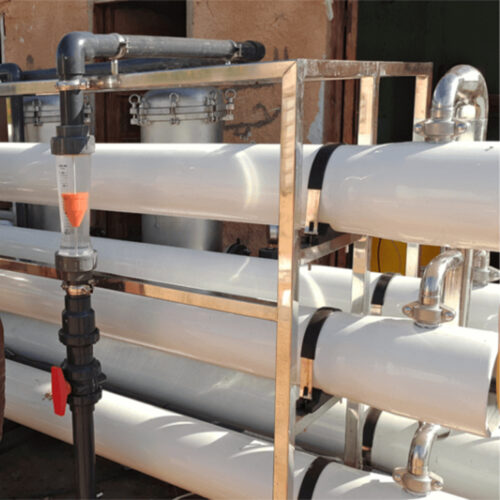
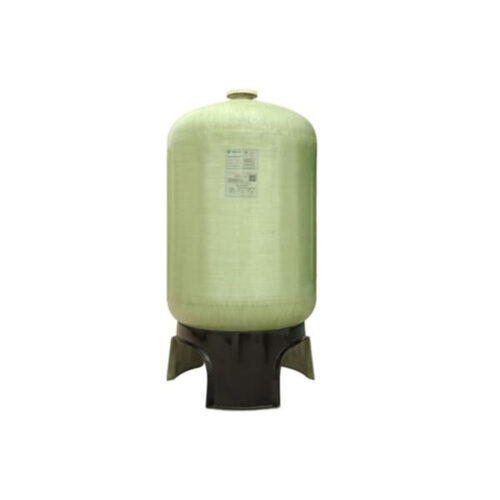
Prinsip Kerja Tangki FRP
1. Prinsip pemurnian
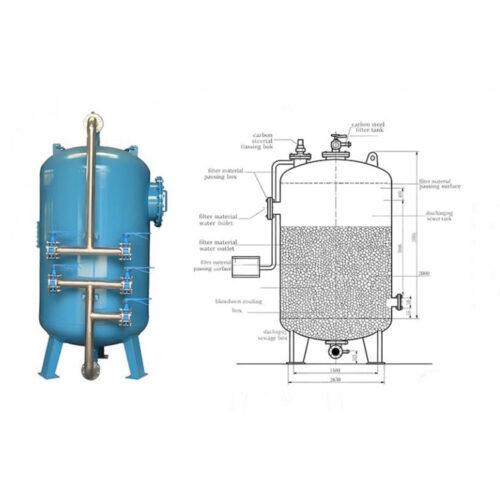
- Air baku masuk ke tangki penyimpanan filter melalui pipa saluran masuk dan didistribusikan secara merata ke seluruh lapisan media filter melalui distributor.
- Air bergerak ke bawah dengan lapisan media filter, dengan menahan padatan, koloid, dan kotoran lainnya yang dipertahankan dan diserap oleh media filter. Air bersih dikumpulkan oleh agen pengumpul dan dilepaskan dengan pipa keluar.”.
- Ketika media filter mulai jenuh dengan kontaminasi yang teradsorpsi, pencucian balik dilakukan. Air pencucian balik masuk dari bawah, menyebabkan lapisan media filter melebar dan mengendur, dan polutan dilepaskan dengan pipa saluran pembuangan bersama dengan air pencucian balik, memulihkan kapasitas penyaringan media filter.
2. Prinsip struktural
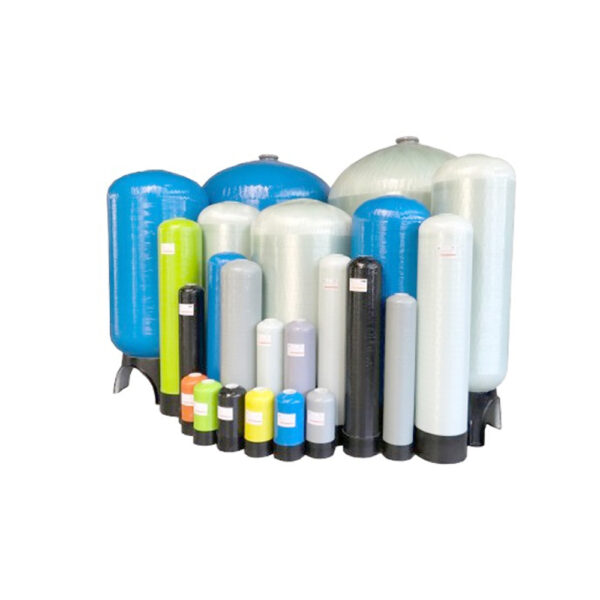
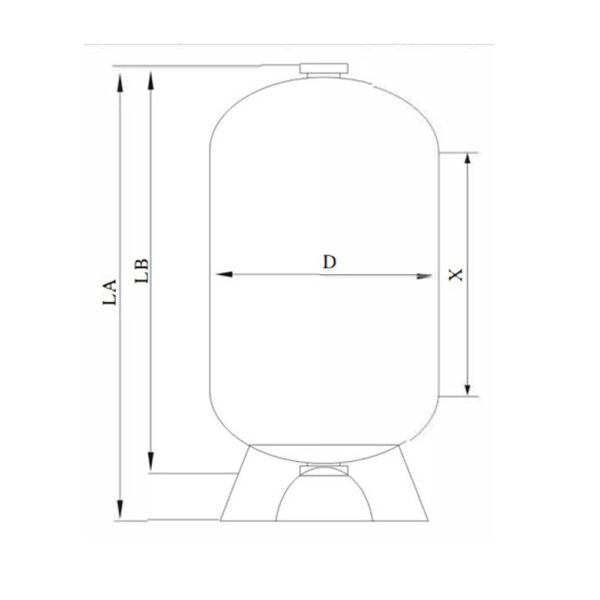
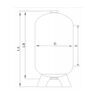
- Badan tangki penyimpanan: Bangunan luka FRP, terdiri dari lapisan lapisan dalam (tahan korosi), lapisan arsitektural (penahan beban), dan lapisan pelindung eksternal (tahan UV), dengan kemampuan menahan efek tekanan air dan korosi kualitas air.
- Sistem sirkulasi air: Yang terdepan menggunakan distributor mulut lonceng atau pelat berlubang untuk memastikan distribusi sirkulasi air yang seragam dan menghentikan media filter lokal yang berlebihan.
- Sistem pengumpulan air: Bagian bawah menggunakan pelat berlubang berbentuk kubah atau pengumpul air tipe pipa cabang untuk memastikan debit air yang konsisten tanpa kehilangan media filter.
- Lapisan bantuan: Terletak di bawah media filter, alat ini menggunakan batu kali atau pasir kuarsa untuk mendukung media filter dan membuat sirkulasi air yang seragam.
3. Penyempurnaan Fungsional Terperinci
- Tahap filtrasi: Katup saluran masuk terbuka → katup saluran keluar listrik terbuka → penutup pipa pembuangan tertutup; air bergerak dengan media filter untuk pemurnian, terus menghasilkan air.
- Fase pencucian balik: Penutup saluran masuk tertutup → penutup saluran masuk backwash terbuka → katup pembuangan terbuka; aliran air dengan instruksi yang berlawanan untuk mencuci media filter, berlangsung selama 5-10 menit.
- Tahap Pembilasan Maju: Tutup penutup saluran masuk backwash → Buka penutup saluran masuk → Buka katup pembuangan, teruskan pembuangan sisa kontaminasi, selama 2-3 menit.
- Pengendalian Operasional: Sistem kontrol otomatis memicu pembilasan berdasarkan perbedaan waktu atau tekanan; sistem kontrol buku pegangan memerlukan pengoperasian katup secara manual.
Apa saja jenis-jenis tangki FRP?
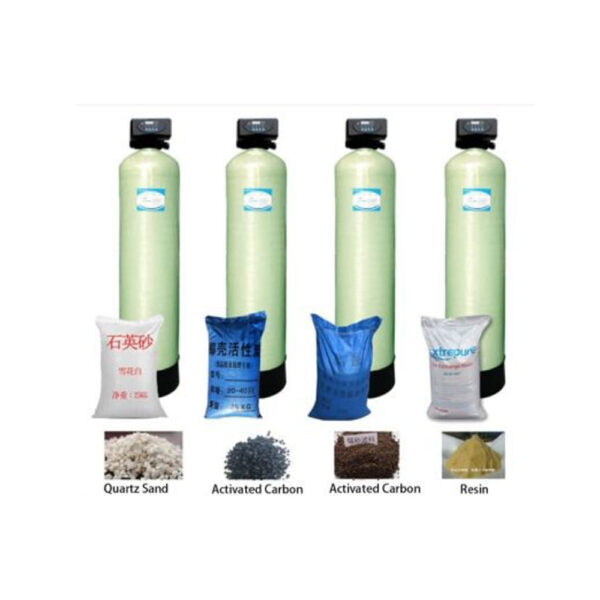
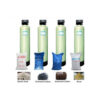
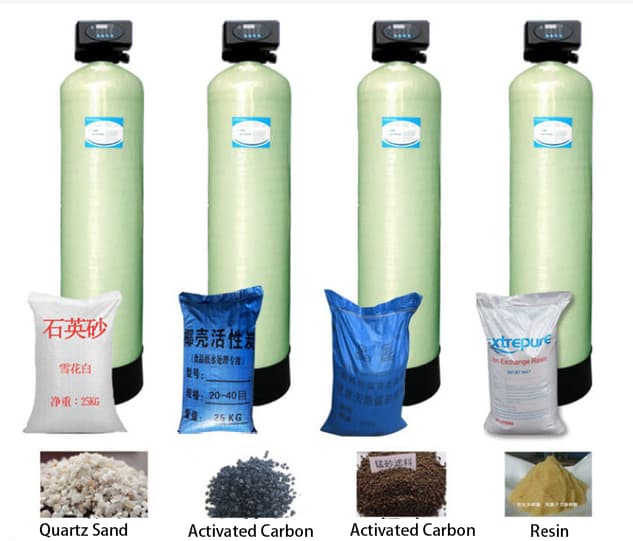
- Tangki filter pasir kuarsa: Menghilangkan padatan, lumpur, karat, dan kontaminasi partikulat lainnya dari air, digunakan untuk pretreatment air kota dan penyaringan air kolam renang.
- Tangki filter karbon aktif: Mengadsorpsi senyawa organik, bau, sisa klorin, dan berbagai kotoran lain dari air, digunakan untuk terapi lanjutan air minum dan pasca-pengolahan air limbah untuk penghilangan warna dan penghilang bau.
- Tangki penyaring pasir mangan: Menghilangkan ion besi dan mangan dari air, digunakan untuk terapi air tanah dan pemurnian air sumur.
- Tangki penyaring multi-media: Dibagi dengan pasir kuarsa, antrasit, karbon yang dihidupkan, dll., untuk penyaringan multi-tahap, digunakan untuk pretreatment air industri.
Standar Pengaturan dan Pemeliharaan
- Tuntutan Instalasi : Peralatan harus dipasang di dalam ruangan atau di lokasi luar yang terlindung, mencegah sinar matahari langsung dan curah hujan; situs web angsuran harus memiliki derajat, dengan persyaratan perangkat konferensi kapasitas penahan beban tanah; pipa saluran masuk dan saluran keluar listrik harus memiliki katup yang dicadangkan dan antarmuka pengguna skala tegangan untuk kenyamanan pemeliharaan.
- Langkah-langkah Instalasi : Pertama, atur perangkat, pasang pipa saluran masuk dan keluar, pipa drainase air, dan berbagai perpipaan lainnya, setelah itu pasang sistem kontrol listrik. Setelah menghubungkan catu daya, lakukan uji coba dan tetapkan parameter, seperti siklus pencucian balik dan pengaturan operasional.
- Pemeliharaan Harian : Periksa perbedaan tekanan setiap filter secara teratur. Ketika perbedaan tekanan melampaui nilai yang ditetapkan, lakukan pencucian balik; berdasarkan masalah penggunaan, secara teratur ganti media filter seperti pasir kuarsa dan nyalakan karbon; Jaga agar lingkungan sekitar tetap bersih untuk mencegah debu masuk ke dalam peralatan.
Bagaimana metode kontrol untuk tangki tekanan FRP?
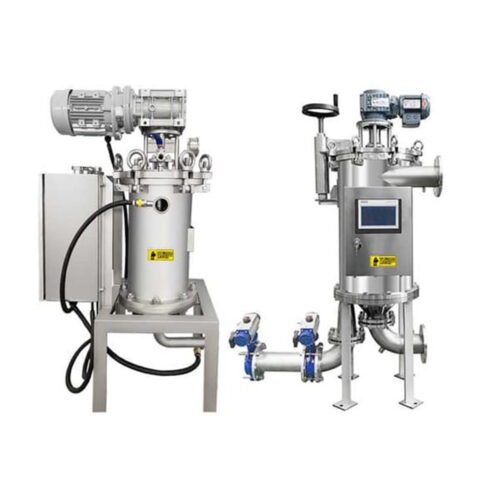
- Wadah filter yang dikontrol secara manual: Menjalankan pemurnian dan pencucian balik melalui katup langsung, ideal untuk sistem kecil dan skenario prosedur berulang.
- Tangki filter yang dikontrol secara otomatis: Dilengkapi dengan katup multi-port atau sistem kontrol PLC, secara otomatis menyelesaikan proses pemurnian, pencucian balik, dan pembilasan, sesuai untuk sistem masif dan kondisi prosedur berkelanjutan.
Proses Produksi dan Kontrol Kualitas
1. Proses Produksi
- Pemeriksaan Sumber Daya: Mengevaluasi ketahanan air dari bahan, kekuatan dan ketahanan karat dari serat kaca, memastikan kesesuaian dengan kriteria peralatan terapi air.
- Pekerjaan Persiapan Cetakan: Akurasi pembuatan jamur dan lumut sesuai dengan persyaratan versi, dengan terapi permukaan yang menghasilkan lapisan seperti cermin untuk menjamin dinding internal tangki penyimpanan yang halus.
- Manufaktur Lapisan: Gunakan bahan epoksi food grade, dengan tangan meletakkan tikar area permukaan dan memotong tikar rambut, pastikan ketebalannya seragam tanpa lubang kecil atau gelembung.
- Pengembangan Berliku: Serat kaca angin sesuai dengan kriteria pembuatan, mengendalikan sudut belitan dan tegangan untuk memastikan stamina wadah.
- Perawatan Penyembuhan: Curing selama 24 jam dalam ruang curing bersuhu konstan untuk memastikan pengawetan resin yang sempurna dan meningkatkan kinerja tangki.
- Instalasi Perangkat: Pasang port inlet/outlet, perwakilan, kolektor, dan berbagai perangkat lainnya, pastikan segelnya rapat dan sirkulasi air lancar.”.
- Pemeriksaan Stres: Lakukan uji hidrostatis pada 1,5 kali tekanan kerja, pertahankan tekanan selama setengah jam; tidak ada kebocoran atau perubahan bentuk.
- Penilaian Terakhir: Mengevaluasi tampilan, dimensi, dan ketepatan antarmuka pengguna, serta merilis sertifikat kualitas produk.
2. Sistem Jaminan Kualitas
- Kualifikasi Kualifikasi: Sertifikasi Sistem Manajemen Mutu Tinggi ISO 9001, Otorisasi Kesehatan untuk Produk Sanitasi Terkait Air.
- Memeriksa Alat: Penguji tegangan hidraulik (untuk mengevaluasi ketahanan tekanan), penguji percikan api (untuk memeriksa kejujuran lapisan), skala kerapatan dinding.
- Menjamin Dedikasi: Garansi produk selama 5 tahun, layanan pemeliharaan seumur hidup, komponen inti (seperti katup multi-port) bergaransi selama 2 tahun.
Keuntungan dari tangki FRP:
- Ketahanan dan Ketahanan terhadap Kerusakan: “ Termasuk lapisan bahan epoksi food grade , dengan kemampuan menahan karat dari ion klorin dan bakteri dalam air. Berbeda dengan wadah penyaringan baja, tidak diperlukan perlindungan karat secara teratur, sehingga memperpanjang masa pakai hingga 20 - tiga dekade.”
- Pemurnian yang Andal: “Dinding internal tangki halus dan rata, menjamin distribusi air yang seragam. Hal ini meningkatkan aplikasi media filter sebesar 15% dan mencapai kinerja filtrasi lebih dari 95%, dengan kekeruhan air yang diolah ≤ 1 NTU.”
- Ringan dan sangat mudah dipasang: “ Mengevaluasi hanya sepertiga dari tangki penyimpanan baja dengan persyaratan yang sama , meminimalkan biaya pembangunan struktur dan konstruksi sebesar 20%. Pemasangan dapat diselesaikan oleh 2-3 orang, dengan durasi pemasangan yang berkurang menjadi 1-2 hari.”
- Kemampuan Beradaptasi Serbaguna: “Dapat dipasangkan dengan media filter yang berbeda sesuai dengan kebutuhan kualitas air, mendukung pengaturan kontrol manual/otomatis, dan memenuhi kebutuhan kemampuan pengolahan dari 5 m SIX/jam hingga 500 m ³/jam.
Pertanyaan yang Sering Diajukan
1. Opsi Desain dan Pengaturan.
T: Bagaimana cara memilih versi yang tepat berdasarkan kemampuan terapi?
J: Perhitungan harus didasarkan pada spesifikasi seperti kemampuan terapi per jam, siklus penyaringan, dan waktu pencucian balik. Umumnya, model harus dipilih pada 1,2 hingga 1,5 kali kemampuan perawatan yang dibuat. Kami dapat memberikan solusi estimasi opsi versi ahli.
T: Media filter mana yang harus dipilih untuk kualitas air yang berbeda?
J: Untuk padatan tersuspensi tinggi, gunakan pasir kuarsa; untuk air yang berbau, gunakan karbon aktif; untuk zat besi dan mangan yang ekstrem, gunakan pasir mangan; untuk kualitas air yang rumit, gunakan campuran beberapa media.
2. Pengaturan dan Pemeliharaan.
T: Apa saja tuntutan untuk struktur instalasi?
J: Diperlukan fondasi beton, dengan toleransi monoton ≤ 3mm, kemampuan menahan beban ≥ 1,5 kali berat alat, dan parit drainase air di sekitar struktur.
Bagaimana biasanya pencucian balik perlu dilakukan?
J: Biasanya ditentukan berdasarkan siklus pemurnian (8-24 jam) atau perbedaan tekanan saluran masuk/keluar (0,05-0,1 MPa), dengan interval tertentu tergantung pada kualitas air baku.
T: Seberapa sering media filter harus diganti?
J: Pasir kuarsa biasanya diganti setiap 2-3 tahun, menyalakan karbon setiap 1-2 tahun, dan pasir mangan setiap 3-5 tahun, dengan interval penggantian tertentu ditentukan oleh tingkat kejenuhan adsorpsi media filter.
3. Efisiensi dan Keamanan.
T: Dapatkah alat ini bertahan pada tingkat suhu rendah?
Solusi: Desain standar beroperasi di atas 5°C. Di bawah 5°C, diperlukan langkah-langkah isolasi. Versi suhu rendah khusus dapat beroperasi di atas -10 ° C.”.
Pertanyaan: Bagaimana cara mengetahui apakah peralatan berjalan dengan normal?
Solusi: Tampilkan tekanan air saluran masuk dan saluran keluar listrik, kualitas air saluran keluar listrik, dan harga aliran untuk kestabilan. Jika terjadi lonjakan/penurunan tekanan secara tiba-tiba atau air keluar keruh, matikan perangkat untuk penilaian.