How Does Industrial Water Softening Equipment Work?
Since water hardness is primarily caused by calcium and magnesium ions, water softeners typically use cation exchange resin to remove Ca²⁺ and Mg²⁺ ions (the main components of scale) from water. As the concentration of Ca²⁺ and Mg²⁺ ions increases within the resin, its ability to remove these ions gradually decreases. Once the resin has absorbed a certain amount of calcium and magnesium ions, it must undergo regeneration. The regeneration process involves flushing the resin bed with brine from the salt tank to replace the hardness ions on the resin, which are then discharged from the tank with the regeneration waste liquid, restoring the resin’s softening exchange capacity. Since water hardness is primarily formed and indicated by calcium and magnesium, the principle of sodium ion exchange softening treatment involves passing raw water through sodium-type cation exchange resin, causing the hardness components Ca²⁺ and Mg²⁺ in the water to exchange with Na⁺ in the resin, thereby adsorbing Ca²⁺ and Mg²⁺ from the water, resulting in softened water. If RNa represents sodium-type resin, the exchange process is as follows: 2RNa + Ca²⁺ = R₂Ca + 2Na⁺ 2RNa + Mg²⁺ = R₂Mg + 2Na⁺ That is, after water passes through the sodium ion exchanger, the Ca²⁺ and Mg²⁺ in the water are replaced by Na⁺.
The typical operational sequence of a control valve is: operation, backwashing, brine absorption, slow rinsing, brine tank refilling, and final rinsing.

How is industrial Water softening equipment working process?
The process consists of five stages: production (sometimes referred to as water production, same below), backwashing, brine absorption (regeneration), slow rinsing (exchange), and fast rinsing. The processes of different water softening equipment are very similar, but due to differences in actual processes or control requirements, there may be some additional steps. Any water softening equipment based on sodium ion exchange is developed based on these five processes (among which, fully automatic water softening equipment adds a brine refilling process).
Backwashing: After operating for a period of time, the equipment will accumulate a significant amount of contaminants brought by the raw water at the top of the resin bed. Removing these contaminants allows the ion exchange resin to be fully exposed, ensuring the effectiveness of the regeneration process. The backwashing process involves water being injected from the bottom of the resin bed and exiting from the top, thereby flushing away the contaminants trapped at the top. This process typically takes approximately 5–15 minutes.
Salt absorption (regeneration): This is the process of injecting brine into the resin tank. Traditional equipment uses a salt pump to inject brine, while fully automatic equipment employs a dedicated built-in injector to draw in brine (provided the incoming water has sufficient pressure). In actual operation, the regeneration effect of brine flowing slowly through the resin is better than simply soaking the resin in brine. Therefore, water softening equipment uses the method of slowly flowing brine through the resin for regeneration, which typically takes about 30 minutes, with the actual time influenced by the amount of salt used.
Slow rinse (exchange): After the brine flows through the resin, the process of slowly rinsing all the salt from the resin using raw water at the same flow rate is called slow rinse. During this rinsing process, a significant amount of calcium and magnesium ions on the functional groups are exchanged with sodium ions. Based on practical experience, this process is the primary regeneration process, so many people refer to it as exchange. This process typically lasts the same amount of time as the salt absorption process, approximately 30 minutes.
Fast rinsing: To thoroughly rinse away any remaining salt, the resin is rinsed with fresh water at a flow rate close to the actual operating conditions. The final effluent from this process should be compliant soft water. Generally, the fast rinsing process lasts 5–15 minutes.

What are the applications of industrial water softening equipment?
Industrial Sector: For example, in boiler water supply systems, it can prevent scale buildup in boilers, which reduces thermal efficiency and poses safety hazards; in the textile and dyeing industry, it can prevent hard water from affecting the dyeing effect on fabrics.
Commercial Premises: In central air conditioning systems in hotels and hospitals, it can reduce maintenance costs caused by scale buildup in pipes; in large laundries, it can make clothes cleaner and reduce the amount of detergent used.
Residential Use: An essential component of whole-house water purification systems, enhancing shower comfort and reducing the likelihood of repairs for appliances such as water heaters and washing machines.
What are the softening equipment components?
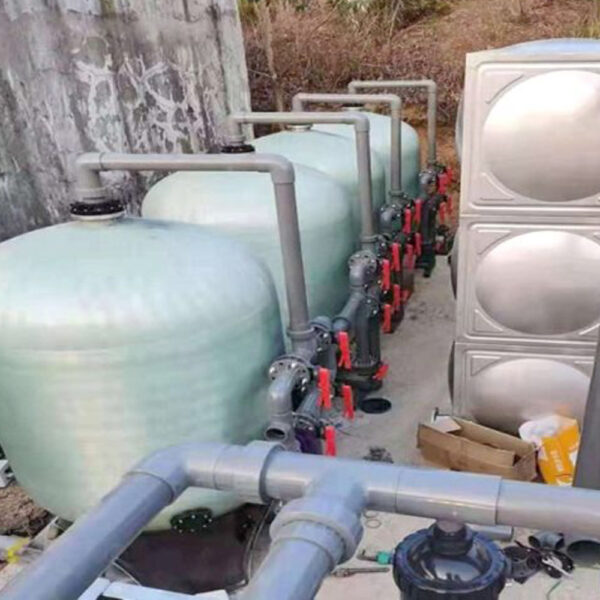
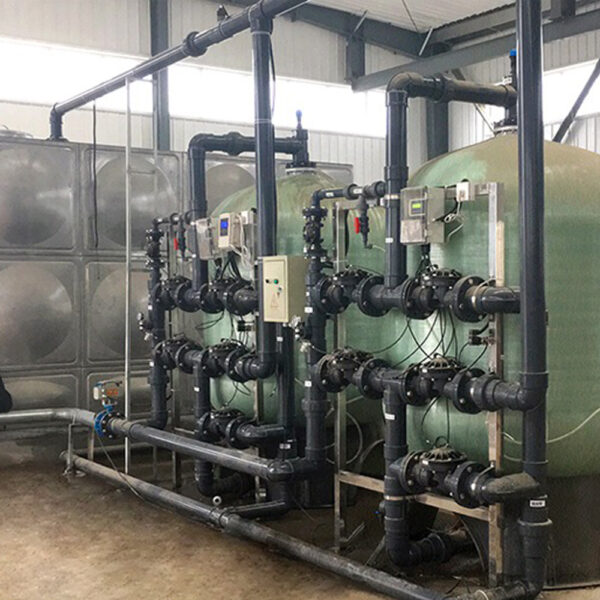
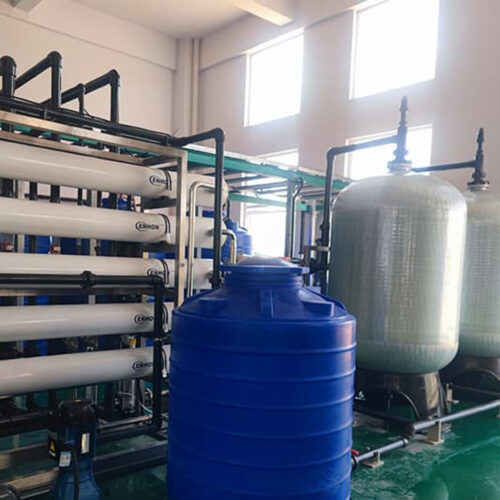
Resin Tank: Used to hold ion exchange resin, serving as the core reaction vessel for water softening.
Salt tank: Stores the brine required for regeneration, providing the raw material for resin regeneration.
Control valve: Controls the operational processes of the equipment, such as water inlet, water outlet, regeneration, and rinsing, enabling fully automatic operation.
Pipes and valves: Connect the various components, ensuring smooth water flow; pipes of different materials can be selected based on actual requirements.
How is industrial water softening equipment Installation and Maintenance?
Installation Conditions: The equipment should be installed in a well-ventilated, dry location free from corrosive gases. The ground must be level with sufficient operational space. A pressure gauge and valve must be installed at the inlet, and a sampling valve at the outlet.
Installation Process: First position the equipment, connect the inlet/outlet pipes, salt pipes, etc., then connect the power supply and perform commissioning to ensure normal operation.Maintenance: Regularly check the salt level in the salt tank and replenish as needed; regularly clean the resin tank and salt tank to prevent blockages caused by impurities; replace the ion exchange resin regularly based on water quality conditions.
Frequently Asked Questions
Q: What should be done if the water output of the water softening equipment is insufficient?
A: This may be caused by resin failure or pipeline blockage. It is recommended to check whether the resin needs regeneration or replacement and clean impurities from the pipelines.
Q: Why is the salt consumption excessive during regeneration?
A: This may be due to an overly long regeneration time or excessively high brine concentration. Adjust the regeneration time and brine concentration appropriately.
Q: Can softened water be consumed directly?
A: Softened water removes calcium and magnesium ions but does not remove other impurities or microorganisms from the water. It is not recommended for direct consumption. If consumption is required, it should be used in conjunction with other water purification equipment.