

Sea Water Reverse Osmosis System SWRO Desalination Plant
Desalination gets rid of dissolved salts and minerals from water, generating fresh water for intake, agriculture, or market. Dealing with global freshwater scarcity, desalination is important, specifically in arid and seaside locations. It’s additionally crucial for dealing with briny water. The primary modern technologies are membrane procedures, mostly Reverse Osmosis (RO), and thermal processes like Multi-Stage Flash (MSF) and Multi-Effect Purification.
Leading Sea Water Reverse Osmosis System Manufacturer
KYsearo specialised in the manufacture of high-efficiency, energy-saving seawater desalination plants. Our strengths include: the use of advanced reverse osmosis (RO) and other processes to significantly reduce energy consumption; the independent research and development/selection of key membrane components and energy recovery devices to ensure performance and longevity; extensive engineering experience ranging from small-scale island equipment to large-scale municipal/industrial projects; and equipment optimised for harsh marine environments, offering corrosion resistance, stable operation, and easy maintenance. We also offer comprehensive services: customised solutions, equipment supply, installation and commissioning, operational support and training.
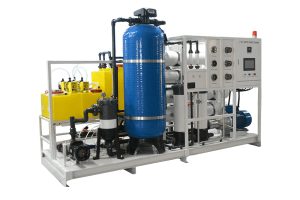
Small & medium scale desalination plant
System has a daily production capacity of 15-3000 m3/day. It uses reverse osmosis..
read more
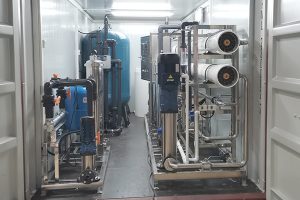
Containerized Seawater RO System
Available in either 20-foot or 40-foot container dimensions, allowing for adaptable choice…
read more
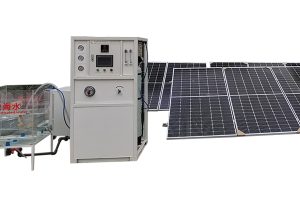
Solar panels convert sunlight into electricity driving the seawater pretreatment unit…
read more
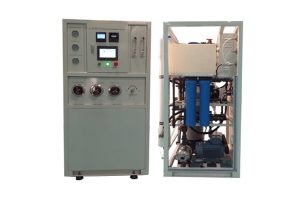
Featuring a compact size, lightweight construction, minimal space requirements…
read more
Your Premier Seawater Desalination Plant Solution Provider
KYsearo has a team of professional engineers who provide customised seawater solutions tailored to specific scenarios, combining technological innovation, operational optimisation, and sustainable design. The following are the solution:
- Large-scale municipal/industrial desalination projects: Utilise Multi-Stage Flash (MSF) or Low-Temperature Multi-Effect Distillation (MED) technologies, with single-plant capacity exceeding 100,000 tonnes per day (e.g., the Caofeidian project), suitable for stable water supply requirements.
- Small to medium-sized desaliantion plants: Primarily using reverse osmosis (RO) technology, combined with solar or wind power, to reduce operational and maintenance difficulties in remote areas.
- Mobile scenarios (marines, emergencies): Using compact electrodialysis (ED) or vacuum freezing devices, suitable for high-salinity or contaminated water quality.
Water Quality Optimisation Design
Drinking water standards: RO or MED treated water undergoes mineralisation treatment (addition of calcium and magnesium ions) to ensure compliance with health standards.
Industrial ultra-pure water: Combines nanofiltration (NF) and secondary RO to remove trace ions (e.g. boiler feedwater).
Enhanced pretreatment: For polluted seawater, uses a sand filtration + ultrafiltration (UF) combination to reduce membrane fouling risks.
Get A Solution Now
What is sea water reverse osmosis desalination plant?
Sea water desalination plants are complex industrial centers generating potable water from saline resources. Their style involves interconnected practical blocks, regardless of core innovation (RO, MSF, MED). These blocks represent consecutive treatment stages from raw water abstraction to product water shipment and brine disposal. The objective is reputable, sustainable abstraction, removal of salts/impurities to fulfill standards, and environmentally very little brine monitoring. Layout is site-specific, influenced by elements like topography, water top quality, and aquatic biology, affecting resources expenses (approximately one-fifth). Key concerns are consistent water top quality and minimizing environmental influence, specifically on aquatic organisms.
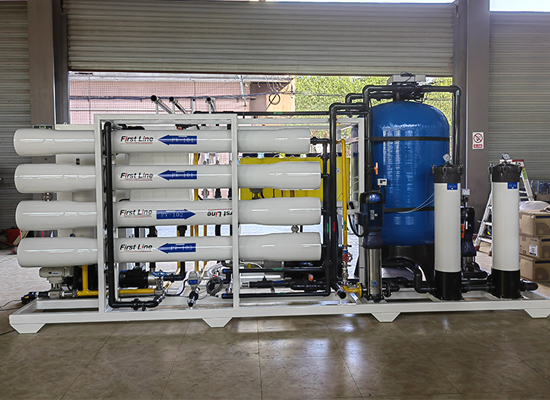
How is sea water desalination plant technology?
Seawater desalination uses membrane-based or thermal processes. RO, the dominant membrane layer modern technology, utilizes pressure to push water with a semipermeable membrane layer, leaving salts behind. Thermal processes utilize dissipation and condensation. MSF and medication prevail thermal methods, differing in performance and intricacy. RO leads in global capability, while thermal techniques, though energy-intensive, are trustworthy for high-salinity water or when waste heat is available.
How is sea Water reverse osmosis (SWRO) desalination process?
RO is a pressure-driven membrane procedure separating water from salts. It reverses natural osmosis by using external stress surpassing osmotic pressure, compeling water through a membrane layer from high to low salinity. The core is the semipermeable membrane layer, usually Thin-Film Compound (TFC) polyamide membranes, favored for leaks in the structure and selectivity over older Cellulose Acetate. Secret criteria are used pressure (going beyond osmotic stress), water flux, and recuperation price. RO removes liquified salts, minerals, and organics. Equipments can be single-pass (brackish water) or double-pass (seawater, high pureness). Advanced RO research concentrates on enhancing membranes with nanomaterials and surface adjustment to boost change, denial, and longevity, addressing challenges like scaling, fouling, and destruction through pre-treatment and cleansing.
How is sea water desalination plant design and how does it works?
1. Seawater Intake and Pre-treatment System
The intake system is the initial user interface, vital for performance and integrity. It collects enough, top quality salt water sustainably and cost-effectively with minimal environmental impact. Intakes are surface area (large volumes, convenient sea pressures) or subsurface (smaller quantities, better, ecologically favored due to less impingement/entrainment).
Raw salt water undertakes pre-treatment to get rid of solids, organics, and biological impurities that nasty or damages downstream elements. Screening is the very first step, influencing procedure and marine environment. Properly designed intake/screening protects tools, reduces ecological effect, and decreases pre-treatment costs.
Screening modern technologies consist of coarse (20-150mm) and fine (1-10mm) displays, followed by finer filtration (0.01-0.2 microns for membrane layers, 0.25-0.9 mm for granular media). Advanced screening minimizes impingement and entrainment (I&E), significant ecological concerns creating high organism mortality. Fine mesh (0.5-5mm) lowers entrainment; Ristroph screens enhance impingement survival. Filter web barriers and easy wedgewire displays also lower I&E. Automatic self-cleaning displays get rid of solids/biota, safeguarding tools and lowering membrane layer cleaning. Drum screens manage high flow-rates.
Material selection is vital as a result of deterioration. Cathodic protection with 316L/Duplex/Super Duplex stainless steels and titanium alloys is encouraged.
Chemical dosing is integral for coagulation, flocculation (accumulating fragments), scale restraint (stopping salt rainfall), and biofouling control (biocides like chlorination).
Ultrafiltration (UF) and conventional media purification (MMF/DMF) prevail SWRO pre-treatment. UF makes use of 0.02 µm membrane layers, efficiently eliminating fine fragments, bacteria, and infections, supplying steady, premium water (SDI15 < 3, turbidity < 0.2 NTU). MMF/DMF utilizes granular media, minimizing solids but normally generating lower high quality (SDI15 > 3 commonly, turbidity ~ 0.33 NTU). UF needs much less footprint, particularly with sedimentation/flotation for MMF. UF uses backwashing, usually without chemicals during production; MMF/DMF also backwash. UF supplies extra steady top quality and easier automation, while MMF battles with low raw water high quality. UF can reduce/eliminate coagulation/chlorine, decreasing chemical use and sludge. MMF has reduced chemical use and high sustainability. Integrating processes like Dissolved Air Flotation (DAF) with UF or MMF assists eliminate algae/organics. DAF with ceramic UF is very efficient. Ceramic UF supplies benefits (less upstream pre-treatment, higher flux, longer life, chemical security) however higher cost and brittleness.

2. Main Desalination Refine Elements
This section covers parts dividing salt from water: Reverse Osmosis (RO), Multi-Stage Flash (MSF), and Multi-Effect Distillation (MEDICATION).
Reverse Osmosis (SWRO) System Elements
SWRO is the leading procedure. Pre-treated seawater is forced under high stress through semi-permeable membranes, declining salts.
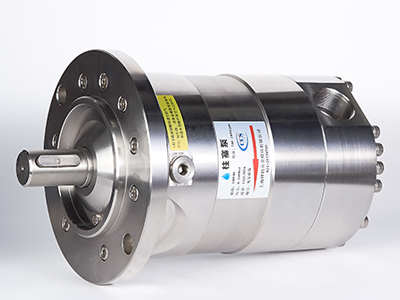
- High-Pressure Pumps (HPPs): Eat 60-80% of plant power. They pressurize water to conquer osmotic stress. Axial piston and favorable variation pumps supply high performance. Multi-train layouts enhance flexibility/redundancy. Materials like Duplex/Super Duplex stainless steels and titanium are made use of for corrosion resistance. Dependability is vital (MTBF > 20,000 hours). N +1 configurations provide redundancy. Predictive upkeep is being explored. Routine maintenance is essential.
- Energy Healing Gadget (ERDs): Crucial for minimizing high power intake by recuperating hydraulic power from brine. Energy expenses are 30-50% of overall. ERDs advanced from generator (60-80% performance) to isobaric (> 90%). Isobaric chambers accomplish 95-97% efficiency. Pressure Exchangers (PX) supply high efficiency throughout flow/pressure. ERDs lower SEC substantially.
- Membrane Components: Core separation elements (spiral-wound/hollow fiber) in stress vessels. Life expectancy is 2-5 years, affected by fouling, chemical degradation (chlorine), and tension. Fouling kinds include biofouling, scaling, organic. High TDS, chlorine, salts, organics, and non-optimal pH speed up deterioration. Membrane layers are replaced when irreversibly damaged (raised penetrate conductivity, lowered flow). Efficient pre-treatment is crucial for extending life by eliminating particles/chlorine. SDI shows fouling potential. Coagulant residuals can influence performance. Enhancing chemical cleansing is essential but adds cost/downtime. Cleaning regularity impacts life/costs. pH is vital for cleaning. Membrane layer recycling provides sustainability and cost savings. Keeping an eye on performance shows replacement requirements. Staggered substitute spreads out expenses. Routine upkeep consists of assessments, surveillance, cleaning. Emerging membrane layers provide improved performance.
- Pressure Vessels: House membrane layers, withstand high pressure. Normally FRP or stainless-steel.
- High-Pressure Piping and Instrumentation: Deal with high pressure/corrosive water. Products: incredibly paired stainless steel, state-of-the-art plastics. Instrumentation displays circulation, stress, temperature, conductivity.
Multi-Stage Flash (MSF) Distillation
MSF is a thermal process blinking heated salt water right into vapor in phases at lower stress. Heavy steam condenses to fresh water.
Secret components: Blink chambers (vapor generation), Warm exchangers (salt water heater, condensers), Ejectors/Vacuum systems (maintain reduced pressure), Inter-stage orifices (control brine circulation).
Multi-Effect Purification (MEDICATION) Parts
Medication is a lower-temperature thermal procedure using warmth from condensing heavy steam in one result to vaporize water in the next at lower pressure/temperature.
Trick components: Evaporators (effects), Condensers, Pumps, Vacuum systems.

3. Post-treatment and Product Water Conditioning Elements
Desalinated water is pure however corrosive and does not have minerals. Post-treatment changes high quality for drinkable or industrial usage.
Trick parts:
- Degasifiers: Eliminate dissolved gases like carbon dioxide, decreasing corrosivity.
- Remineralization Systems: Add minerals (calcium, magnesium) to boost hardness/alkalinity, minimize corrosivity, boost taste/health, and fulfill requirements. Techniques: direct chemical addition (Lime, Calcite, and so on), blending with resource water, sedimentary rock contactors (CO2-acidified water dissolves sedimentary rock). Trick criteria kept track of: pH, alkalinity, solidity, calcium, magnesium, LSI/CSI. Control entails pH change and automated monitoring. Expenses include CAPEX (equipment) and OPEX (chemicals, power, sludge disposal).
- Disinfection Equipments: Kill microorganisms. Approaches: chlorination (salt hypochlorite, chlorine gas), UV irradiation.
- pH Modification Systems: Fine-tune pH making use of chemicals like caustic soda or sulfuric acid.

4. Control, Tracking, and Automation System Parts
Sophisticated systems make sure reliable, reputable, secure procedure using real-time data and automated control.
Key components:
- Instrumentation: Sensors/analyzers procedure flow, pressure, temp, degree, conductivity, pH, turbidity, chemical focus. IoT sensors collect data.
- Control Logic (PLCs, DCS): Foundation implementing control reasoning based upon sensing unit inputs/setpoints. DCS includes interface, local units, interaction. Functions: analysis, guidance, information collection/storage/reporting, control. Plant control is ordered.

Elements Influencing Modern Technology Selection
Selecting desalination technology depends on technological, financial, and environmental factors:
- Technical: Feedwater high quality (salinity, pollutants), plant capability (RO for huge scale), called for water purity, integrity, operational intricacy, and turndown capability (RO for renewables).
- Economic: Capital expenses (thermal evaporators high), operating prices (power high for RO), power schedule and expense (thermal appealing with waste warmth), feedwater salinity (higher expense for RO), upkeep, and Levelized Price of Water (LCOW) (RO forecasted lowest).
- Environmental: Salt water disposal expediency and expense, power source and discharges (renewables integration), and site problems.
- Hybrid systems incorporating modern technologies can offer benefits. RO is favored for islands with high renewable energy use as a result of its turndown ability.
Final Thought and Future Fads
Desalination is crucial for water security, controlled by RO and thermal processes. RO leads as a result of efficiency and modularity, while thermal suits high salinity/waste warmth. Advances in membrane layers, ERDs, and pre-treatment enhance performance and minimize effect. Obstacles include power usage and salt water management.
Future fads focus on:
- Arising Technologies: FO, MD, CDI show promise, needing even more pilot studies.
- Nanomaterials: Enhancing arising tech efficiency.
- Renewable Energy Combination: Coupling desalination with solar, wind, and so on, is a significant emphasis.
- Hybrid Systems: Incorporating innovations for optimization.
- Brine Valorization: Recuperating sources from salt water towards MLD/ZLD.
- Power Performance: Lowering SEC with novel membrane layers and optimization.
- Product Science: Improving materials for destructive settings.
- Decentralized Systems: Developing small systems for remote locations.
- Smart Technologies: Using information and AI to enhance operations.
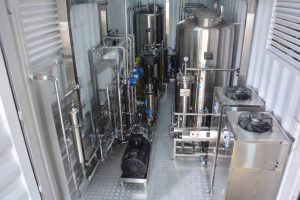
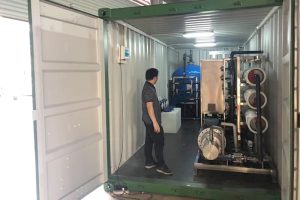
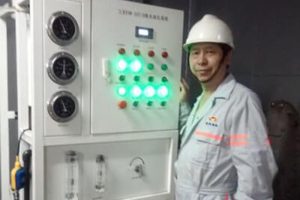
SWRO Plant Projects
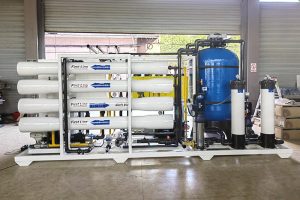
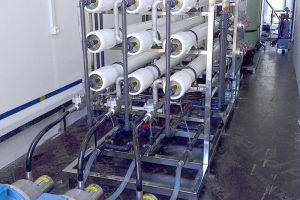
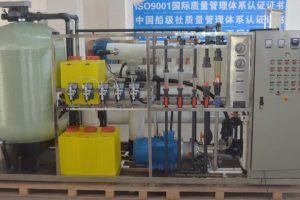
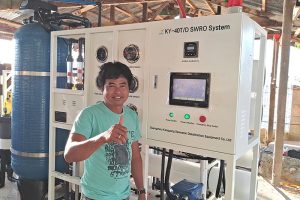
Get A Quote Today!
 English
  Arabic
  Spanish
  Russian
  Danish
  German
  Indonesian
  Romanian
  Vietnamese
  Turkish
  Thai
Thai  Italian